The post This Mother Bear Nursing Four Cubs on a Mountain Road Is Adorable, But It’s Also a Wildlife Lesson appeared first on A-Z Animals.
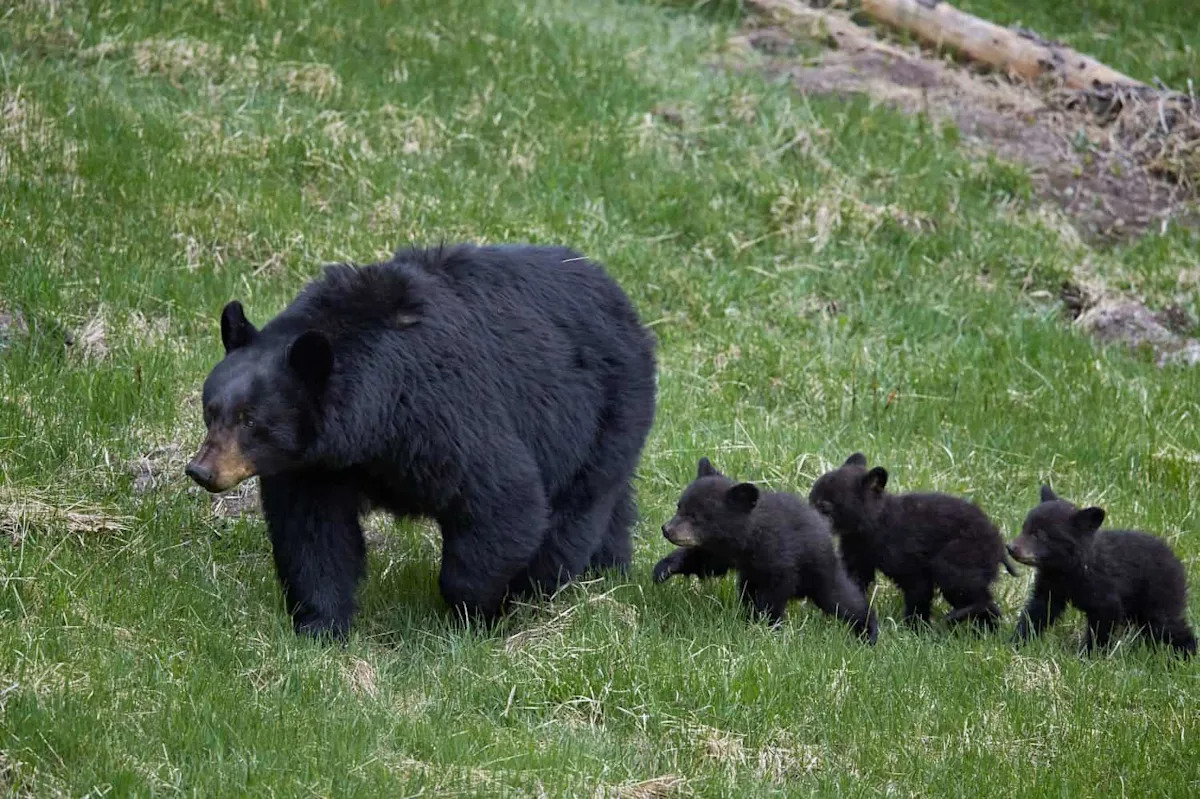
A black bear nursing four cubs on the shoulder of Town Mountain Road in Asheville, NC, is adorable at first glance. But that image is doing more than giving us a rare look at bear motherhood. It captures one of the most vulnerable, high-stakes periods in a black bear’s life and one of the most important moments for humans to behave carefully.
This appears to be an American black bear nursing her cubs. At this age, young cubs are still highly dependent on their mother, and mothers may nurse, rest, and regroup with cubs even in places that feel uncomfortably close to people.
What You’re Really Seeing: A Bear Family in Its Most Demanding Season
A female black bear with four cubs is carrying an enormous biological workload.
Black bear cubs are born in the winter den, usually while the mother is largely inactive and living off stored fat. When they emerge in spring, the cubs are still small, inexperienced, and completely dependent on her for milk, protection, warmth, and guidance. BearWise, an education program supported by state wildlife agencies, notes that in April, many bears are leaving dens for good while mothers continue nursing and caring for cubs.
Despite what it may look like, this mama bear is not just “hanging out.” She is feeding four growing animals while also monitoring traffic, people, noise, smells, and potential threats. Nursing four cubs means her body is converting stored energy and whatever food she can find into milk, all while she has to keep the group together in a landscape full of roads and curious humans.
Four cubs is a large litter, though not impossible for black bears. Seeing that many cubs also makes the scene feel chaotic because cubs do not move like a disciplined family unit. They climb, lag behind, wander, tumble … a mother bear’s job is not simply to “protect” them in the dramatic sense; it is to constantly manage disorder.
Why Roadsides Attract Bears Even When They’re Dangerous
To people, a roadside seems like a strange place for a bear to stop and nurse. To a bear, it may simply be a temporary resting point between patches of food, cover, or safe travel routes.
Black bears in mountain towns often navigate a patchwork of forest, roads, yards, steep slopes, and developed areas. A guardrail or road shoulder may become a pause point, not because it is ideal habitat, but because the family is moving through a human-built landscape layered over bear habitat.
This is especially true in places where bears have learned that human areas can contain food. BearWise warns that bears that previously found human-provided foods often return directly to those food sources after denning. That does not mean the nursing mother in this image was seeking garbage or handouts, but it does explain why bears in communities may appear near roads and homes more often than people expect.
The problem is that roads compress the space between humans and wildlife. A person in a car may feel protected. A bear may feel cornered. A cub may dart into traffic. A well-meaning person may slow down, film, step out, or try to get closer. Each of those actions can turn a quiet moment into a dangerous one.
The Most Important Rule: Do Not Approach the Cubs
The strongest takeaway from this scene is simple: admire it from a safe distance and keep moving.
The North Carolina Wildlife Resources Commission has repeatedly reminded the public not to approach or handle bear cubs, noting that cubs seen alone are rarely abandoned. That advice applies even more strongly when the mother is visible. A cub may look helpless, but the mother may be nearby, stressed, and ready to defend it.
Wildlife officials made this point sharply after a 2024 incident in Asheville where people pulled black bear cubs from a tree for photos. The Associated Press reported that North Carolina wildlife officials investigated the incident and emphasized the risks to both people and cubs when humans interfere with young bears.
That event is worth remembering because it shows how quickly human curiosity can become wildlife harassment. A cub does not need to be touched to be harmed. Crowding, blocking escape routes, stopping traffic, letting dogs bark, or lingering too long can separate cubs from their mother or pressure the family into unsafe movement.
Why Mother Bears Seem Calm Until They Don’t
One reason people underestimate bear encounters is that black bears often appear calmer than expected. A mother may sit, nurse, glance around, or tolerate passing cars without reacting. That does not mean she is comfortable.
Wild animals often conserve energy and avoid unnecessary conflict. A mother bear with cubs may choose stillness because it is the least risky option in that moment. But her tolerance has limits, and those limits can change quickly if a cub cries, a person gets out of a car, a dog approaches, or the family feels trapped.
This is where the “cute” factor can mislead people. The nursing behavior is tender, but the context is not a petting-zoo scene. It is a large wild mammal with dependent young, making rapid decisions in a human-dominated space.
What To Do If You See a Bear Family Near the Road
Stay in your vehicle, give the bears room, and do not stop in a way that blocks traffic. Also, do not get out for photos, feed them or try to get their attention for an Instagram-worthy photo op. Keep your dogs inside the car or firmly leashed if you are already outside. And if the bears are creating a traffic hazard, call local wildlife authorities or law enforcement rather than trying to intervene yourself.
The Bigger Lesson Hidden in This One Sweet Moment
A mother bear nursing cubs is one of the most intimate scenes in wildlife. A guardrail is one of the most ordinary symbols of human infrastructure. Put them together, and you get the modern reality of black bear country: bears are not “entering our world” so much as trying to survive in a landscape we share with them.
That does not mean people should be afraid of every bear sighting. It means we should be disciplined. The safest communities for bears and people are not the ones where every bear is chased away or every sighting becomes a spectacle. They are the ones where residents secure trash, avoid feeding wildlife, slow down on roads, give mothers and cubs space, and let wild animals stay wild.
So yes, a mother bear nursing four cubs on an Asheville road is adorable. But for the bear, it’s also exhausting and risky. The best way to honor that moment is not to get closer. It is to back off, let her finish her motherly duties, and give that bear family space to live stress-free.
The post This Mother Bear Nursing Four Cubs on a Mountain Road Is Adorable, But It’s Also a Wildlife Lesson appeared first on A-Z Animals.