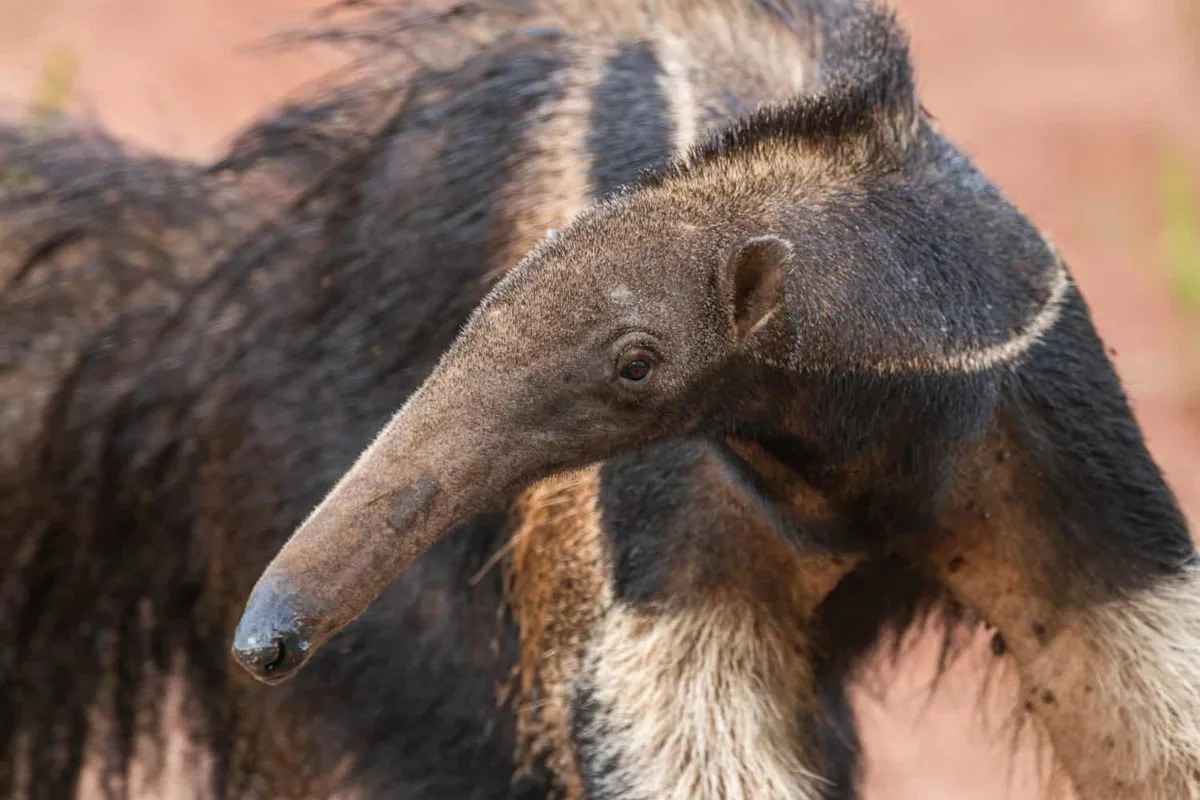
The post The Science Behind How Anteaters Feed appeared first on A-Z Animals.
Anteaters earned their name for a pretty obvious reason: their ant diet. Long specialized tongues enable them to grab multiple ants at one time. This YouTube video by Green Wire News clearly shows an anteater’s tongue scooping up its insect meal.

©Bigc Studio/Shutterstock.com
Anteater Tongues
Anteaters are specifically adapted for eating ants and termites. A single giant anteater can consume roughly 30,000 insects in a single day, and they do so wisely. To make sure they have a constant food source, they consciously eat only a portion of any one colony, allowing it to recover. To eat many thousands of insects in a single day, they have special tongues unlike those of any other animal in the wild. As seen in the video above, their tongues measure about two feet long, which is longer than their own head! The tongue is covered in both sticky saliva and tiny hooks that they use to grab their prey. They flick their tongue out repeatedly, at about 150 times per minute, using it like a living vacuum.
Before feeding, anteaters first must find a colony of ants or termites. While they have poor eyesight, anteaters have an amazing sense of smell. After sniffing out an ant hill or termite mound, they use their curved claws to rip them open, snaking their long tongues through different tunnels in the mound. They lap up any ants or termites and swallow them whole; in fact, anteaters don’t have teeth! Their stomachs are similar to grinding gizzards in birds. Anteaters may ingest sand and grit incidentally while feeding, which can help grind up their food in the stomach. Given how painful ant stings can be, it may sound like a dangerous food source. However, anteaters have thick fur coats that protect them. They truly are the most specialized hunters in the world!
The post The Science Behind How Anteaters Feed appeared first on A-Z Animals.