The post Bobcat Uses Golf Bunker as a Hunting Blind and Gets a Birdie appeared first on A-Z Animals.
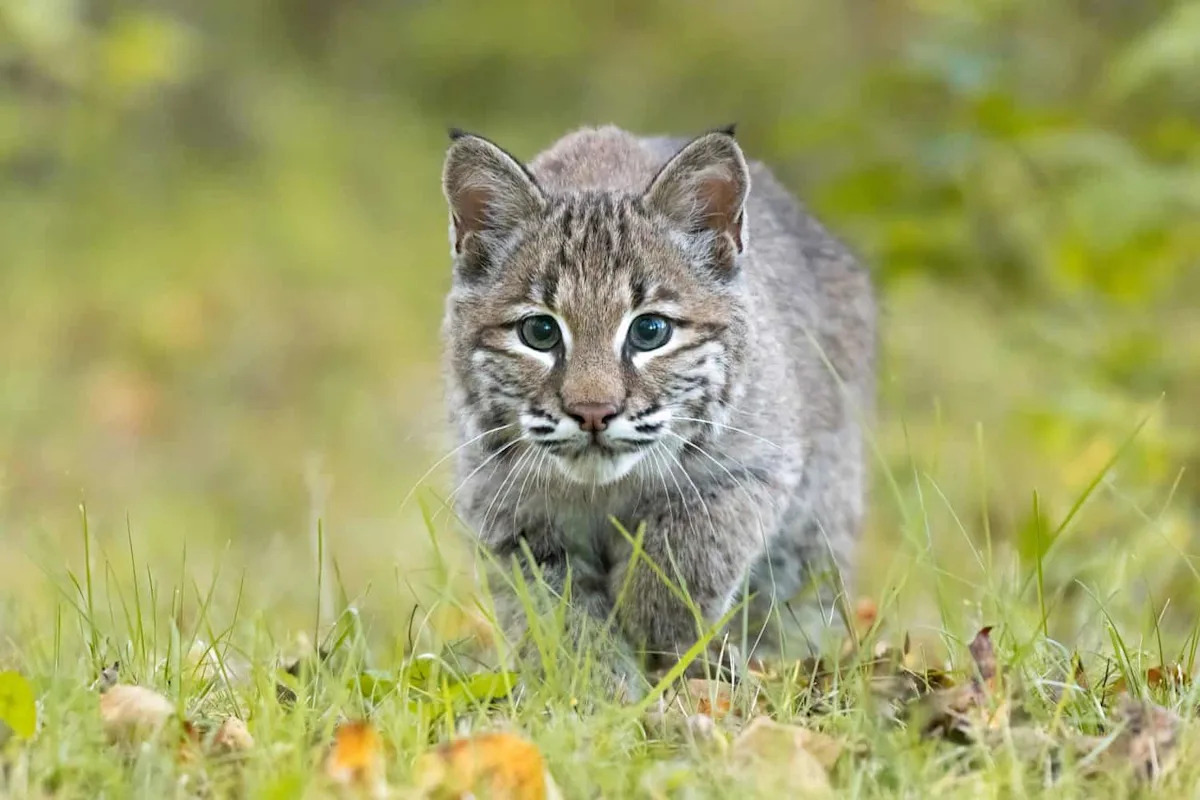
We don’t think this bobcat is planning on a round of golf. The clever feline has discovered that the sand bunkers are an ideal place to hide when stalking a flock of birds. The bobcat stays hidden from view while lifting its head periodically to keep an eye on its potential supper. Finally, it gets in a great position and launches an ambush. Most of the birds get away but one unlucky avian is a little slower than the others. The bobcat gets a birdie!
Where Do Bobcats Normally Live?
Bobcats (Lynx rufus) are members of the Lynx genus and are found across most of the contiguous United States, as well as parts of southern Canada and Mexico. That said, the populations are most dense in the southeastern region of the U.S.
These adaptable wild cats can inhabit a range of habitats, from forests and swamps to brushlands and semi-deserts. They use hollows in trees or rocky crevices as their dens. As this clip shows, bobcats can also hunt in human-altered spaces when suitable cover and prey are available.
How Do Bobcats Normally Behave?

Bobcats are usually most active at night.
©Jack Bell Photography/Shutterstock.com
Bobcats are generally crepuscular, meaning they are most active at dawn and dusk, though they may also move and hunt at any hour of the day or night. Adult bobcats are generally solitary, except during breeding and when females are raising kittens. They are territorial and mark their territories using urine, feces, and anal gland excretions. Male home ranges may overlap with those of several females, but bobcats usually avoid sharing core areas with other adults of the same sex. Bobcats communicate not only through scent marking but also through vocalizations. They are usually quiet, but they can produce growls, snarls, screams, and hisses, especially during the breeding season or confrontations.
What Do Bobcats Normally Hunt?
Bobcats are carnivores that rely on animal prey, though they may also scavenge carrion when available. As seen in this clip, they stalk their prey before pouncing. If they are successful, they usually kill prey with a powerful bite to the neck or head. Most of their diet consists of rabbits, hares, rodents, and other small animals, though bobcats can occasionally take larger prey such as deer. They also eat birds, including ground-nesting birds such as wild turkeys, as well as reptiles when available. Near farms or neighborhoods, bobcats may occasionally prey on poultry, small livestock, or pets, though wild prey typically constitutes the majority of their diet.
Young bobcats may be killed by coyotes, foxes, great horned owls, eagles, bears, and even adult male bobcats. No exact count exists, but bobcats are widespread and abundant in the U.S.; published estimates range from roughly 700,000 to more than 1 million, with some later analyses suggesting even higher numbers. The species as a whole is listed as Least Concern by the IUCN, but bobcats may be protected or managed differently at the state level depending on local population history and regulations. Many states allow regulated bobcat hunting or trapping seasons, while others prohibit harvest or maintain stronger protections for local populations.
The post Bobcat Uses Golf Bunker as a Hunting Blind and Gets a Birdie appeared first on A-Z Animals.