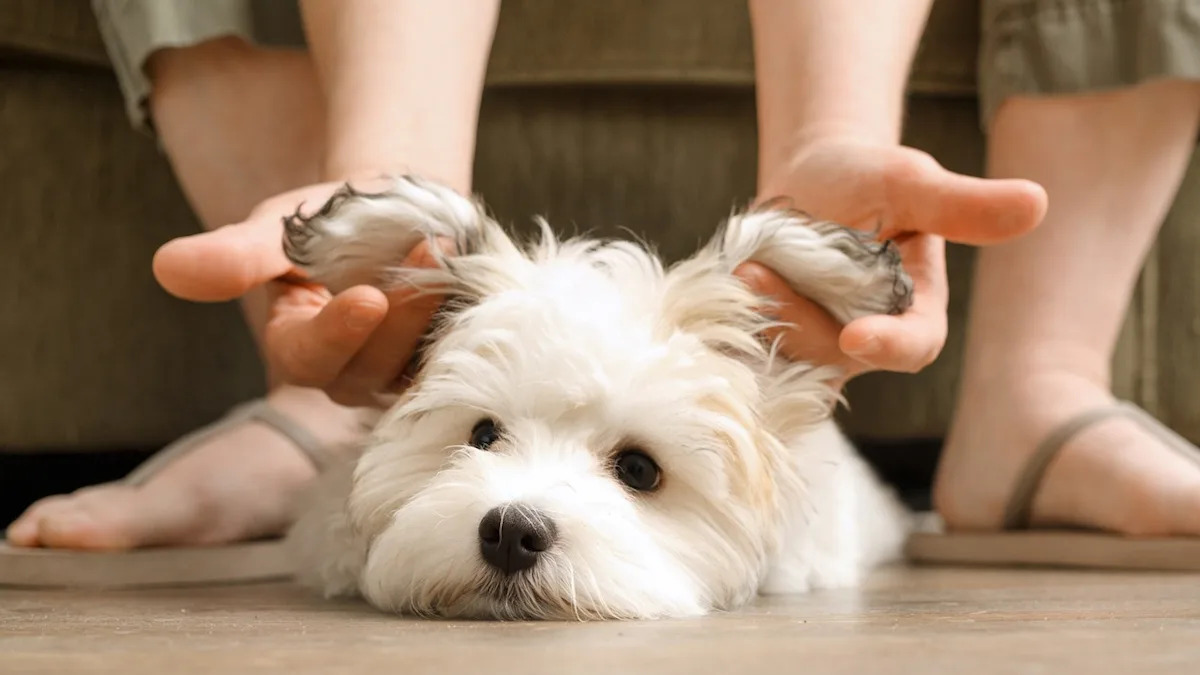
Seeing how close you and your pet are, you may feel like you speak your dog’s language. However, the risk of sounding like a killjoy, that’s not technically true. So if you’ve ever thought to yourself, “Why does my dog ignore me when I talk?” it’s most likely because dogs communicate different than people and some words or phrases you say can cause your dog stress. However, since pups can’t speak out and reveal which words they aren’t fans of, it’s not always easy for pet parents to tell which ones trigger them. To help you become more aware, we rounded up 6 words that surprisingly annoy dogs the most, according to trainers.
Bridget Murphy, the CEO of Koru K9 Dog Training notes that dogs tend to associate words with experiences—like ‘vet.’ As a result, certain words can annoy your dog when you say them and can give them anxiety. “Dogs don’t understand words or language the same way humans do,” explains Murphy. “The words themselves don’t have meaning to a dog. Rather, dogs are experts at picking up tone, body language, patterns and emotional context.”
If you’re curious which words dogs hate the most, keep reading. You may be shocked to learn phrases dogs don’t like hearing and what dog behaviors can help you pick up on the words that your dog doesn’t like. Once you recognize your dog’s stress signals and have an idea of what words you shouldn’t say to your dog, you’ll see that your bond will grow even more.
Related: 8 Cute Signs That Mean Your Dog Is In a Good Mood and Happy, According to Trainers
6 Words That Annoy Dogs The Most, Trainers Say

A dog hearing words that annoy it.Getty Images Maria Korneeva
No matter if you have a lap dog or a big dog, chances are the same similar words can make them upset. Trainers reveal the importance of knowing the words that annoy dogs the most, so you can avoid or help your pet deal. “Realizing which trigger words affect your pups is important so that you don’t accidentally cause them stress or upset them,” explains Annie-Mae Levy, CFBA, a professional dog trainer at Woofz. “It’s also important to recognize which words may have negative associations, so you can either work on desensitizing them or avoid using those words altogether.”
Scroll on to learn the words that make your dog cringe on the inside. Then, try to avoid using them when you commincate with your furry best friend.
1. “Why?”
You come home to find your dog has chewed your new shoes. Frustrated, you may wonder out loud—or yell—“Why?!” But according to dog trainers, that is one of the most common words that annoy dogs when pet owners say it.
“If your dog hears you repeat ‘why’ a lot, especially if you sound angry when you’re saying it, after they have done something ‘wrong’, it is very easy for them to build a negative association with the word,” Levy says. “This is a common dog communication mistake. Often shouting why at a dog will cause them to look guilty, but dogs can’t actually experience guilt.”
Levy explains that what many owners interpret as guilt is really an appeasement response—a body-language signal dogs use to calm humans and diffuse tension. Ironically, while the word may stress or confuse them, dogs don’t understand why you’re upset at all. This is a key reason trainers say tone of voice matters more than words when communicating with dogs.
2. “No.”
You may use the word “no” a lot, espeically when training a puppy. However, Levy says overusing this word can backfire. “Hearing this word constantly when being pulled away from things the puppy wants to do, such as chewing your shoes, can make the word no heavily associated with feelings of frustration and conflict instead of helping with dog behavior,” Levy says. This is why “no” often appears on lists of words dogs hate or training words to avoid.
That doesn’t mean you need to eliminate the word entirely. “A calm, well-timed ‘no’ can interrupt unwanted behavior in the moment,” Murphy says. “The key is removing emotion. Say ‘no’ once, at the exact moment your dog makes an incorrect choice, then immediately guide them toward the correct behavior and reinforce it.”
Murphy explains that dogs learn through contrast and consistency: Option A (your shoe) doesn’t work, but Option B (their somehow more expensive squeaky toy) does. This approach aligns with positive reinforcement training, which experts say is far more effective than repeatedly saying “no” without redirection.
3. “Bad.”
This is another word that annoys dogs the most. While it might roll right off the tongue, trainers wish it was used less by dog moms and dads.
“Calling a dog ‘bad’ can be emotionally damaging, especially for sensitive dogs,” says Ashley Carpenter, the owner and head trainer at Limitless Canines. “Unlike a clear correction tied to a specific behavior, the word ‘bad’ is vague and often said with anger or disappointment.”
Carpenter explains that dogs don’t understand moral labels—only actions and consequences. Because of that, using “bad” can create confusion rather than improving dog behavior. Trainers note that this kind of language can weaken trust, increase stress and interfere with effective dog communication, which is why it often appears on lists of words dogs hate or phrases dog owners should avoid.
Related: 8 Adorable Signs You Hold the Top Spot in Your Dog’s Heart, According to Trainers
4. “Bath.”
Even dogs with few grooming needs have to splish-splash in the bath, but that doesn’t mean they’re pumped about it. In fact, you may notice signs that your dog is stressed when they hear you say tis word.
“Many dogs learn to dislike the word ‘bath’ because it often comes before an uncomfortable or overwhelming experience,” Carpenter states. “The slippery floors, physical restraint, water temperature and lack of control all add to the stress.”
“To help reduce the unhappiness dogs associate with the word “bath,” Carpenter suggests:
-
Introducing water gradually
5. “Vet.”
“Raise your hand if you have spelled the word V-E-T around your dog?” Murphy asks. Mst pet parents have been there, likely because they’ve learned that the word “vet” can make dogs anxious.
“Much like ‘bath,’ the word ‘vet’ often signals something unpleasant from a dog’s perspective,” Murphy adds. “Strange smells, getting poked and prodded by strangers, a waiting room full of other strange dogs or animals and past discomfort can all contribute to a negative association.”
This is why “vet” often appears on lists of words dogs hate hearing or phrases that make dogs nervous, especially in dogs prone to vet-related stress.
6. “Car.”
Honestly? Many dogs love car rides, but some don’t. For these pups, ‘car’ is truly annoying.
“There are some dogs, like humans, that get car sick,” Murphy says. “Or, maybe the V-E-T is the only place they go when they get into the C-A-R.”
Murphy adds that using positive reinforcement and safety measures can make car rides more enjoyable, even for the most anxious pups.” Helping a dog feel safer and more comfortable can change that association over time,” Murphy suggests. “Like anything, start slowly. We do recommend using a crate in the car to keep your dog safe and secure—this can dramatically reduce or eliminate car sickness.”
Signs Your Dog Is Annoyed and What To Do
Knowing which words annoy dogs the most is a great first step toward reducing stress, but recognizing signs your dog is irritated and knowing how to respond are just as important.
“Annoyance in dogs can look like lip licking, yawning, turning away, freezing or just general avoidance,” Carpenter says. “Some dogs may also bark or whine, paw or dig or display a more tense body posture.”
As the pet parent in the room, your job is to help them feel safer. However, Carpenter doesn’t suggest jumping into action.
“When you notice these signs, the best response is to pause, reduce pressure and assess what caused the stress,” she advises. “Clear communication, allowing your dog to acclimate and changing expectations can go a long way toward keeping everyday words from becoming stressors.”
By learning these signs your dog is annoyed, owners can prevent minor annoyances from escalating into larger behavior problems, making training more effective and improving dog-human communication overall.
Sources:
This story was originally published by Parade Pets on Jan 10, 2026, where it first appeared in the Dogs section. Add Parade Pets as a Preferred Source by clicking here.