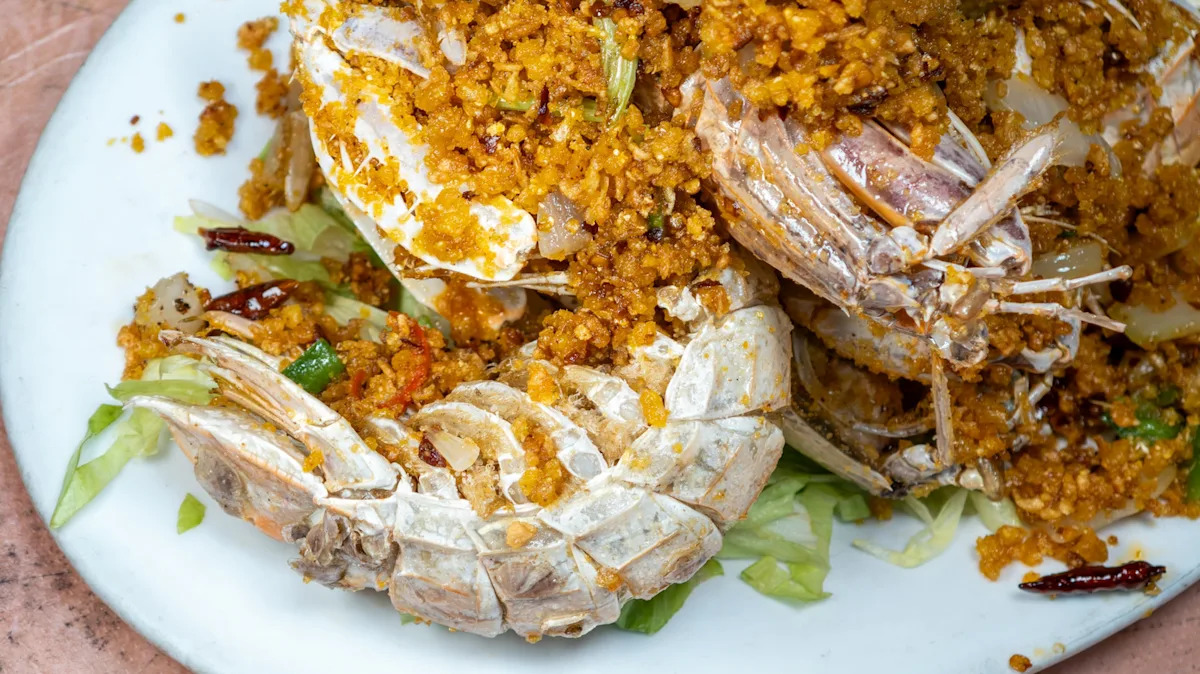
Typically, when you see shrimp, you’re actually looking at shrimp tails. While there are times when it’s best to leave shrimp heads on, the seafood counter at the grocery store usually offers either raw or cooked shrimp tails with the heads already removed. But if you’ve ever seen a whole shrimp, you know they’re a little funny looking. Enter mantis shrimp, which are a crustacean that, when whole, look borderline bug-like and kind of resemble aliens (let’s just say you should be thankful you’ll never see one of these crawling around your house).
The mantis shrimp is named as such because it somewhat resembles a praying mantis, hence the bug-like appearance. But surprisingly, they’re not truly classified as shrimp – this is scientifically due to the way they feed, their vision, and their specialized limbs. The mantis shrimp is found in warm, tropical, or subtropical waters. Its meat comes from the tail, as with standard shrimp, but its flavor is on the sweeter side with a tenderness that almost resembles lobster. Mantis shrimp and other shrimp share similar cooking methods, and while it’s common for a standard shrimp’s head to be separated from its body before it’s sold and cooked, mantis shrimp are often sold and cooked whole.
Read more: Store-Bought Canned Crab Meat Ranked Worst To Best
How to cook and eat mantis shrimp

Plate of uncooked mantis shrimp on marbled countertop. – Matthiasrabbione/Getty Images
While mantis shrimp are usually cooked with their heads and shells on, you still have to devein them the same way you would with regular shrimp. Cut down the center of the shell, then remove the vein before cooking. From there, you can cook them how you would cook other shrimp or lobster. The mantis shrimp can be boiled, grilled, sautéed, fried in oil, or even poached with bouillon for extra flavor, depending on the exact taste and texture you’re looking for. The time required can vary, but to cook the shrimp with the head and shell on takes about three minutes.
Since cooking methods for this crustacean vary, some people do remove the shrimp’s head and shell prior to cooking. If you plan to leave the head and shell on, though, it’s a good idea to cut off the feelers, tail spikes, and clamp of the shrimp (body parts on the top and bottom of the mantis shrimp). Otherwise, when you remove the shell and head to eat the shrimp, you could poke yourself on those sharper parts. You can build flavor with mantis shrimp the same way you would with other crustaceans by cooking them alongside wine, aromatics, and herbs. Combine them with flavorful vegetables like bell peppers and onions for an even better taste.
Want more food knowledge? Sign up to our free newsletter where we’re helping thousands of foodies, like you, become culinary masters, one email at a time. You can also add us as a preferred search source on Google.
Read the original article on Chowhound.