The post The “Calendar of the Wild”: Why Hunting Seasons Open When They Do appeared first on A-Z Animals.
Quick Take
-
States set hunting seasons based on animal breeding times of year, as well as protective methods used during the wintertime.
-
Keeping animal populations stable is at the heart of hunting seasons, with consistent annual reports and research utilized to determine accurate hunting season bag limits and times.
-
Late winter is actually the most lethal period for big game survival, as animals have depleted fat reserves and food is scarce, which is why hunting is generally restricted during this time.
-
Winter Range Closures are mandatory in the state of Oregon to prevent the depletion of limited fat reserves found in big game animals.
Why are hunting season dates so specific? While the way hunting seasons are determined may seem like an easy or arbitrary choice, it is far from that. In practice, these dates are actually built around biological timing that’s predictable, right up until the fickleness of a changing world or habitat gets in the way. Wildlife and hunting officials set hunting season dates for a reason, and these are the reasons.
We interviewed an Oregon wildlife department representative who wished to remain anonymous for an insider’s look at how hunting seasons are set, the factors involved, what animals are hunted when, and why seasons are constantly in flux.
Seasons Are Built Around Animal Biology
Wildlife managers set hunting seasons during specific windows—short periods when animals are vulnerable and human interference could be especially harmful.
“Spring isn’t an off-season for wildlife, but that doesn’t mean hunting can safely occur,” the anonymous representative from the Oregon Wildlife office reports, “It’s the season when the next year’s population is growing up and trying to survive, which is why it’s more sensitive to hunting than people realize.”

Research informs hunting season dates.
©splendens / iStock via Getty Images
(splendens / iStock via Getty Images)
The spring birth period for deer and elk represents this exact phenomenon. Oregon’s wildlife agency notes that deer and elk give birth from May through July, and that calves and fawns spend their early lives hidden and fairly immobile, making it risky to hunt during this time. The animals’ survival strategy at that stage is fragile, which is why big game is rarely hunted during spring.
Nesting and Fawning Seasons: Keeping Populations Stable
If a state wants a stable animal population, it must protect reproduction and the early rearing of the animals. That applies to mammals and birds, even though their vulnerabilities and hunting seasons can look different.
For deer, Oregon’s rut occurs in late fall, with fawns arriving roughly seven months later, typically late May into mid-June in much of the state. When it comes to birds and waterfowl, Oregon’s multi-year upland game bird season guidelines state that seasons are designed to maintain hunting opportunity while staying compatible with the overall status of bird populations. This is highly dependent on population numbers, both from prior years and estimates for upcoming years.

Hunters that use boats should follow all regulations and be conscious of risks associated with using boats while hunting.
©Moroz Elena/Shutterstock.com
(Moroz Elena/Shutterstock.com)
“If a hunter disrupts nesting or the first weeks of fawning season, you lose recruitment, and recruitment is what determines what the population looks like a year from now,” the Oregon wildlife official explains, “Recruitment is just a fancy way of saying ‘young and vulnerable future populations,’ but it’s how we refer to it, and sometimes people don’t realize how impactful hunting can be on new mother animals and their young.”
Fall Seasons: Rutting and the Hunting Demand
Fall is when hunting seasons feel busiest, and there is a clear reason behind it. Many species are more mobile and better able to absorb any population disturbances or disruptions than they are in spring or late winter months.
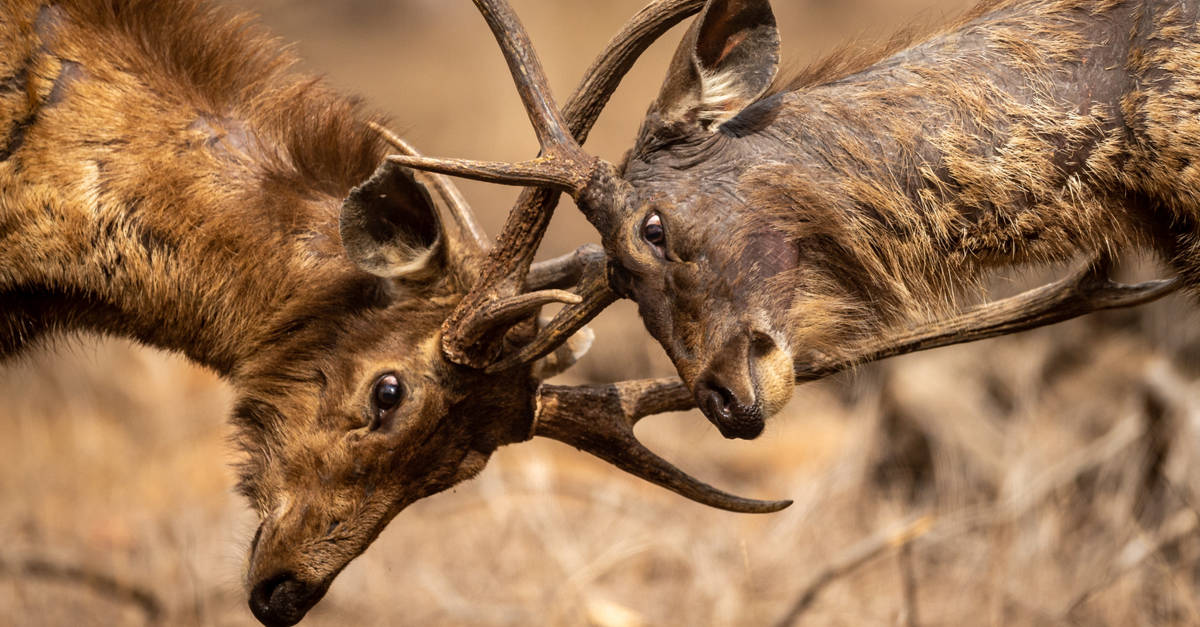
Oregon’s deer rut typically spans from late October through early December, which is why many deer hunting seasons occur in October and November. Wildlife agencies across the United States during this period are looking at multiple population dynamics within any given herd, making it a complex juggling act.
“We pay attention to so much in even just a single species,” the Oregon representative states, “and we have to manage harvests in ways that don’t undo the population structures we’ve worked so hard to maintain.”

Oregon’s deer hunting seasons correspond to the rutting time of year, as this is when huntable bucks are most active.
©Jim Cumming/Shutterstock.com
(Jim Cumming/Shutterstock.com)
This often means that mating should occur before hunting pressure increases. The structure of hunting seasons can also be used to manage the ratio of bucks to does taken, depending on a state’s goals and the status of individual herds.
For example, ODFW hunting information describes mid-September as the peak of elk breeding season, and it’s not an accident that general archery elk seasons in Oregon occur in late August through late September. Those dates naturally intersect and overlap with pre-rut and rut activity while still paying attention to what a herd needs to survive.
Winter Closures: Why No Hunting In Winter?
Late winter is when hunting rules can feel strict, depending on the state you’re hunting in. But why? There’s one clear reason: energy.
“In winter, deer and elk live on an extremely limited budget of fat reserves, since food is scarce. If these animals are repeatedly disturbed by anything that forces them to run, they burn that fuel and can’t easily replace it,” the wildlife representative tells us.

Winter isn’t a good time for hunting in most states, as animals need to conserve their energy.
©Bradley Wakoff/Shutterstock.com
(Bradley Wakoff/Shutterstock.com)
Oregon’s wildlife agency has been aware of this time of year since it began. An aptly-titled ODFW update known as “Winter Weakens, Spring Kills” urges the public to respect winter range closures and travel restrictions. Big game needs these months to recover and rebuild their energy before spring births occur. If hunted all winter long, most of these animals will not have the energy to make it successfully through spring.
The Legal Frameworks and Fines of Hunting Seasons
Animal biology explains why hunting season timing must be adhered to, and laws ensure this timing becomes enforceable. Oregon statutes treat wildlife as a public resource and prohibit taking animals outside of the state’s established rules, and the state also restricts chasing or harassing wildlife outside of any lawful activity, making it clear that animals aren’t to be messed with.
“Illegal take outside of set hunting seasons is technically a theft of a public resource,” the wildlife representative states, “and taking a mature female, especially in big game, can come with even heftier fines. If you remove one female from a herd, you might’ve potentially removed an entire future generation.”

Fines and even jail time exists for hunters that don’t follow their state’s regulations and rules.
©Steve Oehlenschlager/Shutterstock.com
(Steve Oehlenschlager/Shutterstock.com)
In high-profile cases, Oregon has pursued fines and restitution for events such as these, describing $16,000 owed for unlawfully killing trophy animals. Jail time and significant penalties are also enforceable, making hunting an extremely intricate and highly regulated system. In fact, Oregon has listed dollar amounts depending on the species and category, making it something every hunter should be aware of before heading out, even during a legal hunting season.
How Oregon Builds Their Hunting Seasons
Oregon has both general seasons and controlled hunts, with detailed season tables published through the state’s e-regulations portal. Hunting seasons are set with a mix of data-backed monitoring and public input.
Biologists track body conditions of game animals, local fawn survival trends, winter severity, habitat conditions, and harvest data gathered from previous years to set seasons. In particular, over-winter survival and body conditions heading into the fall can vary by district, which helps inform annual bag limits and set expectations for hunters.

Oregon’s hunting regulations differ from nearby states, but only to a small extent.
©arboursabroad.com/Shutterstock.com
(arboursabroad.com/Shutterstock.com)
Managers within Oregon also work with land partners to reduce winter disturbances of certain species. But how do Oregon’s hunting seasons differ from those in other states?
How Oregon’s Hunting Regulations Differ From Other States
One of the biggest structural differences compared to other states is that Oregon explicitly splits big game opportunity into general seasons and controlled hunts. That split ultimately shapes everything else, especially when it comes to controlled hunts, as they require applying ahead of time for a specific hunt number and area.
The controlled-hunt aspect of the season is where Oregon diverges the most from regulations upheld in nearby states. Oregon lets hunters list multiple hunt choices and also runs a preference point system tied to controlled hunts, including point-saving rules spelled out in the state’s administrative code.

Certain types of hunting styles align with the animal species being hunted; elk hunting season aligns with archery season openings, for example.
©paul geilfuss/Shutterstock.com
(paul geilfuss/Shutterstock.com)
In contrast, Washington utilizes a weighted-point approach for special permit hunts, with points accumulating through applications and used to weight draw odds in the system. Idaho also uses a different model, running controlled hunts without a point system, treating some general-season access differently depending on the hunter’s residency and tag type.
Hunting Regulations as Peace Treaties: A Different View of Hunting
It can be helpful to think of hunting regulations as peace treaties, since they represent a negotiated boundary between human use of animals and biological limits. Seasons protect the precious weeks whenever a future generation is forming, and they help to concentrate harvest when animals can better tolerate hunting disturbance and when enforcement can be clearer for hunters to follow.
When the system is followed, both hunters and animal populations benefit. However, if the system is ignored or violated through illegal hunting or harassment, the consequences appear later as reduced recruitment and more difficult management decisions, as our Oregon Wildlife representative points out.

Human interference can have devastating effects on game animals, which is why hunting seasons are so strict.
©AdamLongSculpture/ via Getty Images
(AdamLongSculpture/ via Getty Images)
“Any hunting season calendar needs to be followed. The rules are not optional or nice to have. If they’re not followed, future hunting seasons suffer, and the animal populations can struggle to recover. Just a little interference can do way more harm than most people realize,” the wildlife representative says.
Respecting the Hunting Season Calendar is a Must
It is vital that hunters respect their state’s hunting season calendar and understand the opportunities it provides. With so many rules in every state, understanding your own state’s specific regulations is your responsibility as a hunter.

Understanding your state’s hunting season dates and rules is a must as a responsible hunter.
©© Getty Images/Stockbyte via Getty Images
(© Getty Images/Stockbyte via Getty Images)
Ultimately, these dates are constructed to match the most important weeks in an animal’s year, and the rules are written to preserve their internal rhythms and way of life. That’s why state officials spend so much time working toward a goal that helps animals while still ensuring there’s room for human recreation.
The post The “Calendar of the Wild”: Why Hunting Seasons Open When They Do appeared first on A-Z Animals.