Parade Pets and Yahoo may earn commission from links in this article.
When we talk about dogs, we often think about the unconditional love our furry friends have for us and vice versa. But experts are begging pet parents to understand that unconditional love doesn’t mean a dog doesn’t have their limits. In fact, there may be affectionate behaviors people do that dogs secretly hate. However, because dogs communicate in ther own way, it can be hard to know how your pup feels if you don’t know how to read their body language. To help you understand your dog better, we rounded up 6 things your dog hates that you think are affectionate, according to a trainer.
“Sometimes, people are not the best at seeing a dog’s body language and being able to tell that they are unhappy or scared,” explains Annie-Mae Levy, CFBA, professional dog trainer at Woofz. So, how can your dog doesn’t like something? By paying attention to their reactions when you do something like hug them to see if it seems to affect them or annoy them. In those cases, you may see dog stress signs or signs your dog is uncomfortable. “By educating yourself on what dogs generally do and do not like, you then don’t need to be quite so aware of analyzing how they feel every time you show affection.”
Levy shares that loving pet parents aren’t trying to upset their dogs on purpose. Sometimes, it’s a matter of projection and people forget that our dogs love them, but they are their own separate species. Because of this, there are things dogs hate that owners do. “It is very hard for us as humans to imagine what another species does or doesn’t find pleasant,” Levy explains. “We fall into the trap all the time of assuming our dogs like exactly what we do, but canines and humans have evolved very differently so it makes sense they would show affection differently than we do.”
To help you how to avoid that trap and keep you from wondering, “What behaviors do dogs hate?” keep reading. Some of them may surprise you. Find out if you’re guilty of any, so you can stop doing them and strengthen your human-dog bond.
Related: 7 Signs Your Senior Dog Is Still Happy (Even if They Can’t Play Like They Used To)
6 Affectionate Behaviors You Think Your Dog Loves—But Hates

A dog annoyed beinig hugged and kissed.
It’s natural to want to shower your pet with all the love in the world. However, there are things that your dog hates that you think are affectionate (or, perhaps, guests in your house do). Levy shares insights that will help you show you avoid accidentally scaring or annoying your dog, so you can focus on speaking their actual love language.
1. Hugs
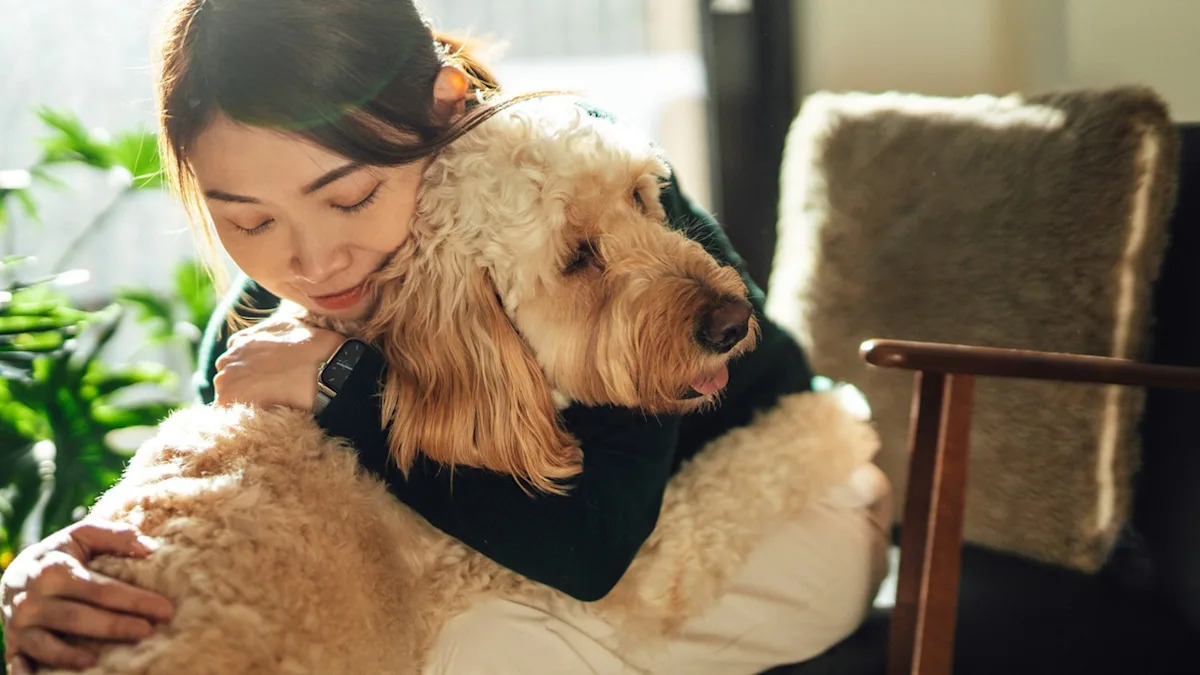
When you think about how you can show affection to your dog as a pet owner, giving them a hug may come to mind. However, that might not be the best idea as it’s actually a dog owner mistake and a behavior dogs find stressful. In fact, Levy is begging pet parents to exercise some personal restraint because dogs don’t like hugs. “Dogs do not hug one another, so this is one of those actions that translates badly,” Levy explains.
Instead, hugs can look a bit like another body cue in the dog world with a different (and fear-triggering) meaning. “Usually, dogs will only posture over one another to assert control, and so for a dog that’s less well socialized or on the nervous side, this can be a bit too scary,” Levy adds.
So, how can you show love without upsetting you dog? The best way to show your dog affection is with gentle ear scratches, belly rubs, or back pets. Even a brief touch or quick peck can reinforce your human-dog bond without making your pet uncomfortable.
2. Direct eye contact
Humans are taught to look someone in the eye as a sign of respect or to foster a deep connection. However, this is one of the things dogs hate that owners do to them. Why should you not make direct eye contact with a dog? “Naturally, eye contact in the canine world can signify threatening behaviour and aggression,” Levy says.
Instead of forcing direct eye contact, pay attention to your dog’s body language to see that it’s something they dislike, and let them choose when to look at you while using gentle gestures and positive reinforcement to build trust and strengthen your human-dog bond.
3. Over-the-top happy greeting
Your dog may do a happy dance and bark happily the moment they sense you’re coming home, which may be before you get to the door. It’s natural to want to match the excitement, and Levy says your dog may like it. The issue is that giving a greeting that registers at a 20/10 on the happy scale can backfire, causing stress, frustration, or behavioral issues. If you notices these dog behaviors, those are signs your dog is annoyed.
“Over-the-top greetings can lead to frustration and upset down the line when this isn’t consistent between everyone or someone doesn’t want the dog to jump up,” Levy says. Because of this, it’s better to greet your dog calmly, reward relaxed behavior, and maintain a consistent routine to reinforce positive dog behavior and strengthen the human-dog bond.
Related: 7 Sweet Signs Your Dog Loves You & Thinks About You All Day
4. Head pats
Both big and small dogs may adore a good petting session focused on their back, however, Levy notes that many pups wince when someone goes in for a head pat, which shows you it’s a behavior your dog isn’t a fan of. If this is something you do, you’re not alone as it’s a common mistake dog owners make without knowing it.
Why do dogs dislike head pats? “Hands over a dog’s head aren’t really visible to them, so a hand coming down repeatedly can feel intimidating,” Levy explains. This makes head pats one of the affectionate behaviors dogs don’t like.
To avoid stressing your dog, keep your hands where your dog can see them as you pet. Focusing on areas they enjoy, like their back, belly, or ears, shows affection in a way that respects your dog’s comfort and boundaries.
5. Handshakes or dancing
This is one of the affectionate things dogs dislike that owners may not realize. While some dogs enjoy learning tricks like shaking hands, it should never be forced. Even dogs who usually respond to commands may show subtle signs that they’re uncomfortable—like walking away or refusing to participate. The same applies to taking both paws for a “dance” with your pet.
“Grabbing your dog forcibly for anything like this, which might seem fun, can be really upsetting for them,” Levy says. “This puts a lot of social pressure on them and will reinforce the feeling that they are unable to flee if they wanted to.”
Look out for signs your dog is annoyed or anxious. Pay attention to your dog’s body language, including them turning their head, moving away, or stiffening. These are clear signs your dog is stressed or uncomfortable. Always remember: it’s your pet’s prerogative whether they want to participate in tricks, dances, or affectionate gestures. Respecting their boundaries strengthens trust and promotes a healthy human-dog bo
6. Going to big group gatherings
When it comes to behaviors dogs secretly hate, socalizing them can be one of them. While some pets are the life of the party, others don’t feel safe in big, noisy crowds, so keep them in mind before bringing your pet to a family reunion, your wedding or the bash of the summer. Even though you may be bringing them so they can be by your side, the kind guesture may be overwhelming to some pets.
“While for some dogs this might be really fun, for a lot of more introverted dogs, loud noises and busy spaces are very overwhelming and scary,” Levy points out. “Dogs love predictability and routine, so more often than not, you’re best off leaving them at home for that party.”
Signs that your dog is uncomfortable in big crowds include freezing in place, hiding, shaking, or trying to escape. Recognizing these behaviors can help you avoid stressing your dog, keep them safe and maintain their emotional well-being during social events.
Source:
-
Annie-Mae Levy, CFBA, professional dog trainer at Woofz
This story was originally published by Parade Pets on Mar 8, 2026, where it first appeared in the Dogs section. Add Parade Pets as a Preferred Source by clicking here.