The post Do Animals Cry Like Humans? These 3 Come Closest appeared first on A-Z Animals.
Quick Take
-
Most animal tears serve physical purposes such as lubricating the eye and removing debris rather than expressing emotion.
-
Humans appear to be the only species clearly proven to shed tears specifically because of emotions.
-
Elephants, primates, and dogs show behaviors and biological responses that come closest to human crying.
-
Scientists continue studying these animals to determine whether emotional tears occur outside the human species.
Crying is one of the most recognizable human emotional signals. Tears appear when people experience grief, relief, joy, or deep stress. Because this response is so familiar, observers often assume that animals with wet eyes are crying for emotional reasons as well. Viral videos of animals with moisture running down their faces reinforce this belief. However, scientists draw a careful distinction between emotional crying and the normal eye fluids that maintain eye health.
Most animals produce tears to protect the eye rather than to express feelings. These fluids lubricate the surface of the eye and wash away dust or irritants. Emotional tears, which humans shed during intense feelings, appear to be far less common across the animal kingdom.
Still, several species show behaviors or physical responses that resemble human crying in certain ways. Elephants sometimes display visible eye moisture during emotional events. Primates produce vocal cries when distressed that resemble human infant crying. Dogs may produce slightly more tears during joyful reunions with their owners. Each of these animals mirrors a different aspect of human crying, though none matches it perfectly.
The Biological Purpose of Tears
Before discussing emotional crying, it is important to understand why tears exist in the first place. The eyes of land animals require moisture to stay healthy and functional. Tear glands produce fluid that spreads across the eye with each blink. This fluid removes dust, bacteria, and small particles that could otherwise damage sensitive tissue.

Tears in animals and people help prevent the eyes from drying out and remove debris.
©sebra/Shutterstock.com
(sebra/Shutterstock.com)
Two main types of tears serve this protective role. Basal tears constantly coat the eye to maintain lubrication. Reflex tears appear when irritants such as smoke, chemicals, or strong wind affect the eye. These tears flush away the irritant and restore balance to the surface of the eye.
Animals experience these same reactions. A dog exposed to pollen may develop watery eyes. An elephant walking through dusty terrain may produce extra eye fluid to wash away grit. Because these tears can overflow the eyelids, they may look similar to emotional crying. In most cases, however, the fluid simply reflects the eye’s maintenance system at work.
Emotional Tears in Humans
Human emotional tears differ from the protective tears found in most animals. Research shows that tears shed during emotional events contain slightly different chemical compounds. Scientists have detected increased levels of certain hormones and signaling molecules in emotional tears compared with basal tears.
Psychologists believe emotional crying may also serve a social purpose. Tears signal vulnerability and may encourage comfort from others. A crying person often receives reassurance, physical support, or help solving a problem. These reactions strengthen social bonds and cooperation within human communities.
Because emotional crying appears linked to human communication and empathy, many researchers long believed it was unique to our species. Animals clearly experience fear, pleasure, and distress, but their emotional signals usually appear through sound or movement rather than through tears.
The Scientific Debate About Animal Tears
Recent studies have reopened the question of whether animals might produce tears linked to emotional states. Observations of elephants, primates, and dogs have prompted researchers to look more closely at the relationship between emotion and tear production in animals.
The evidence remains incomplete. Some studies report increased tear production during certain social events, while others find no connection between emotion and eye fluid. Scientists emphasize that interpreting animal emotions is difficult because animals cannot describe their internal experiences.

Some studies show that tear production can increase during emotional events for some animals.
©XxongZoo/Shutterstock.com
(XxongZoo/Shutterstock.com)
Rather than claiming animals cry exactly like humans, most researchers examine similarities in behavior, biology, and social interaction. This approach reveals that some species resemble human crying in certain ways, even if they do not shed emotional tears the same way humans do.
Animals Emotions Expressed Without Tears
Animals communicate emotional states through a wide range of signals. Vocal sounds often provide the clearest expression of distress. Young mammals separated from their mothers produce loud, rhythmic calls that prompt adults to respond quickly. These cries carry important survival information within the group.
Body language also plays a major role. Animals may crouch, tremble, or tuck their tails when frightened. Others withdraw from social interaction or remain still when threatened. Caregivers who work closely with animals learn to recognize these patterns as reliable signals of stress or fear.
These responses show that emotional communication does not depend on visible tears. A chimpanzee infant calling loudly for its mother or a dog whining after being left alone clearly communicates distress without producing tearful eyes. Understanding these signals helps researchers interpret animal behavior without forcing human expectations onto it.
Elephants and Visible Eye Moisture
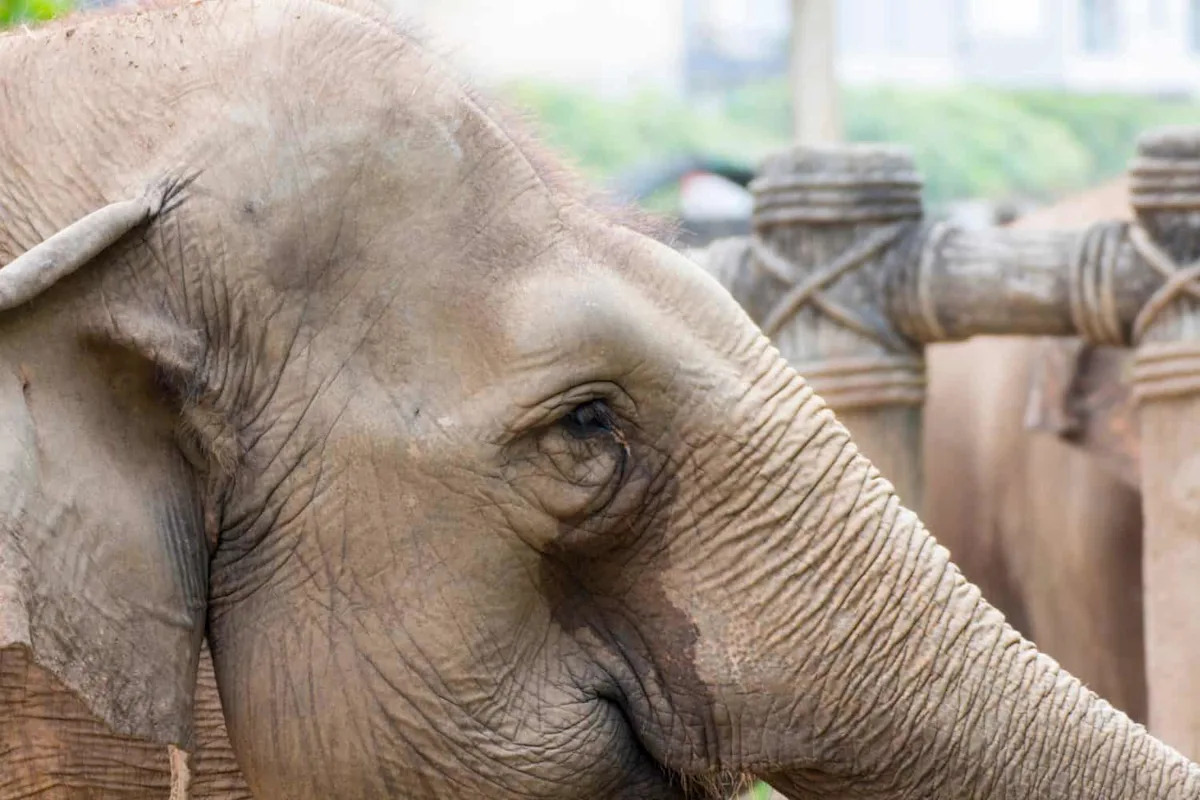
Elephants often appear in stories about animals crying. Observers sometimes report seeing fluid running down an elephant’s face during stressful situations such as injury, separation, or rescue from hardship. The explanation partly lies in elephant anatomy. Their tear drainage system does not remove fluid quickly, so moisture can spill over the eyelids and become visible.
Because this fluid may run down the face, people often interpret it as emotional crying. Scientists remain cautious about this interpretation. Dust, irritation, or environmental conditions can produce the same effect. Moist eyes alone do not confirm emotional tears.

Elephant biology, environment, and rich emotional life may all be factors explaining why elephants shed tears.
©Pham Thanh Hung/Shutterstock.com
(Pham Thanh Hung/Shutterstock.com)
Elephants nevertheless show strong emotional behavior. Herd members frequently gather around injured companions and remain nearby for extended periods. Individuals may also investigate the bones of deceased elephants with their trunks. These social behaviors suggest deep awareness of other members of the herd, though the connection to tear production remains uncertain.
Emotional Life of Elephant Herds
Elephant societies revolve around close family groups led by experienced females. Members maintain long term relationships and recognize one another over many years. These strong bonds influence how elephants respond to emotional events.
When one elephant becomes distressed, nearby herd members often approach and make physical contact with their trunks. This contact appears to calm the distressed individual. Researchers describe this behavior as reassurance, similar to comforting gestures observed in other social mammals.
These interactions suggest that elephants experience emotional contagion, a process in which individuals respond to the emotional state of another group member. Emotional contagion helps maintain group stability and cooperation. While it does not prove that elephants cry emotional tears, it highlights the complexity of their emotional lives.
Primates and the Sound of Crying
Primates share many biological and behavioral traits with humans. Chimpanzees, gorillas, and monkeys possess brains designed for complex social relationships. Because of this similarity, researchers have carefully examined how primates express distress.
Most evidence shows that nonhuman primates do not produce tearful emotional crying from their eyes. Their eyes usually remain dry during emotional events. However, primates produce strong vocal cries when frightened, injured, or separated from caregivers. These calls often resemble the rhythmic crying of human infants.

When distressed, primates express emotion through screeching and calling rather than shedding tears.
©Sergey Uryadnikov/Shutterstock.com
(Sergey Uryadnikov/Shutterstock.com)
Infant primates rely on these cries to attract attention and protection from adults. The calls trigger rapid responses from mothers and other group members. In this sense, primates cry in a behavioral way similar to humans, although their crying relies on sound rather than visible tears.
Emotional Expression in Primates
Primates communicate emotion through posture and movement as well as sound. Young apes may cling tightly to caregivers when frightened. They sometimes rock or sway when distressed. Adult primates may withdraw from group activity after losing a companion or after social conflict.
Observers occasionally report moist eyes during these moments, but scientific studies have not confirmed that these represent emotional tears. Instead, the moisture likely reflects normal eye lubrication.
Even without tearful crying, primates clearly experience complex emotions. Their social interactions, cooperation, and conflict resolution strategies show a depth of emotional awareness that parallels human social behavior in many ways.
Dogs and Human Companionship
Dogs hold a special place in discussions of animal emotion because of their close relationship with humans. Over thousands of years, domestication shaped dogs to respond strongly to human behavior. They recognize gestures, facial expressions, and tone of voice with remarkable sensitivity.
Watery eyes in dogs have traditionally been explained by physical causes such as irritation, allergies, or blocked tear ducts. Certain breeds also have facial structures that allow tears to spill easily over the eyelids.
Recent research suggests a possible emotional influence on tear production in dogs. Scientists measured tear volume in pet dogs before and after reunions with their owners. The results showed a modest increase in tear production during these positive social interactions.

Some research shows increased tear production in dogs after reunions with their owners.
©Nadya So/Shutterstock.com
(Nadya So/Shutterstock.com)
Oxytocin and Canine Tears
In a related experiment, researchers applied oxytocin solution to dogs’ eyes. Oxytocin is a hormone associated with bonding and affection in mammals. The treatment led to an increase in tear production. These findings suggest that emotional states may influence tear flow in dogs. However, the studies involved relatively small numbers of animals. Scientists continue to test whether these results hold true across larger populations and different conditions. Even with these limitations, dogs provide intriguing evidence that emotional experiences may influence tear production in at least one nonhuman species.
Why These Three Animals Receive Attention
Elephants, primates, and dogs attract attention in discussions about crying because each reflects a different element of human emotional expression. Elephants show visible eye moisture and strong social bonds that resemble emotional situations in humans. Primates display vocal crying and body language similar to human infants. Dogs show early experimental evidence that emotion may influence tear production.
Each species therefore reflects part of the human crying experience rather than the entire phenomenon. Elephants resemble humans visually, primates resemble humans behaviorally, and dogs may resemble humans physiologically. Taken together, these animals illustrate how emotional communication evolved across social mammals while still leaving emotional tears as a largely human trait.
What Animal Crying Reveals About Human Emotion
Research on animal crying highlights the deep connections among social species. Distress calls, comforting contact, and social bonding occur widely across mammals. These shared behaviors suggest that emotional communication evolved long before humans appeared.
Human emotional tears may represent a specialized form of communication layered onto these older signals. By studying elephants supporting distressed companions, primate infants calling for their mothers, and dogs responding to their owners, researchers gain insight into the biological roots of empathy and social care.
The search for emotional crying in animals continues. Future studies may reveal new evidence about how emotions influence tear production in different species. For now, elephants, primates, and dogs provide the clearest examples of animals that resemble humans in at least one aspect of crying.
The post Do Animals Cry Like Humans? These 3 Come Closest appeared first on A-Z Animals.