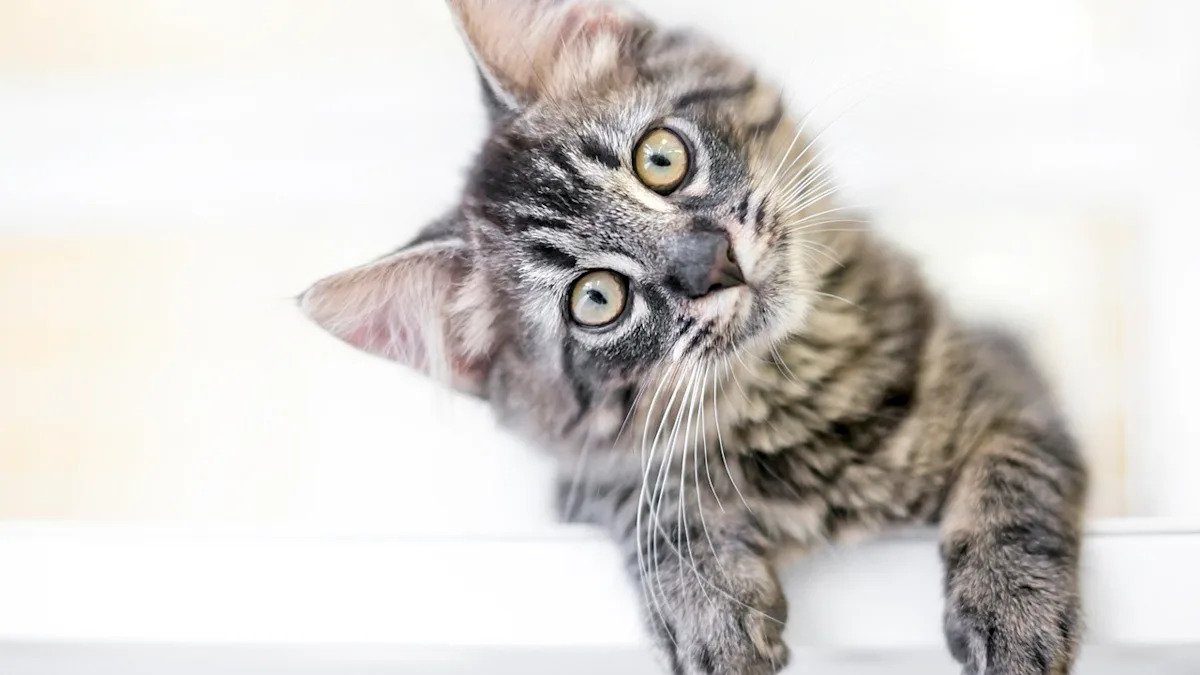
Parade Pets and Yahoo may earn commission from links in this article.
Have you ever seen your cat’s ears move around, or your kitty run for no particular reason? You may think they’re “hearing things,” and you may be right. However, the sounds aren’t in your cat’s head. Dr. Julie Hunt, DVM, a veterinarian with Embrace Pet Insurance, says there are sounds only cats can hear that people can’t. “A cat’s hearing is more sensitive than a human’s is,” Dr. Hunt explains. So, how well can cats hear? “Cats are able to detect sounds that are about 10 decibels quieter than humans can hear. This helps cats hear sounds approximately five times farther away than humans can.”
In fact, Hunt says that cats have some of the “broadest hearing ranges” in the animal kingdom. “They can hear more ultrasonic sounds—such as those with a higher frequency—than humans,” Dr. Hunt reports. “In fact, humans can hear sounds up to about 20,000 Hz and cats can hear sounds up to 85,000 Hz. While cats can hear high-frequency sounds better than humans, they can also still hear low-frequency sounds.”
Dr. Hunt adds that a cat’s unique ear mobility also contributes to their top-notch hearing making this somewhat odd cat behavior even more impressive. “Cats are able to move their ears to the sides or back, which improves their ability to hear sounds behind them and helps them to localize sounds very accurately,” Dr. Hunt says. Because of all of these things, Dr. Hunt reveals that there are weird sounds cats can only hear. Are you curious what those are? She shares five of the most unexpected sounds cats can hear, along with if they can hear better than dogs as well.
Related: 7 Signs You Are Your Cat’s Safe Place, According to Vets
Why Do Cats Have Such Great Hearing?
So why did cats evolve to have such a powerful sense of hearing? Cats have such great hearing because it helps them survive and hunt. Being able to detect high-frequency sounds allows them to locate prey like mice and birds, even when hidden. Their rotatable ears help them pinpoint danger or food, giving them an evolutionary advantage in both hunting and avoiding predators.
Can Cats Hear Better Than Dogs?
Cats can hear better than dogs in certain ways, especially when it comes to high-frequency sounds. While dogs can hear sounds ranging from about 67 Hz to 45 kHz, cats can detect noises between roughly 48 Hz and 85 kHz. This means cats can pick up ultrasonic sounds that even most dogs cannot hear.
Cats’ superior hearing is partly due to their highly mobile ears, which Dr. Hunt explains can rotate up to 180° to pinpoint the source of a sound. They also have more auditory cells in their inner ear, which allows them to detect very subtle noises. Dogs, on the other hand, are often better at detecting mid-range sounds and vocal cues, including human voices. So while both cats and dogs have hearing far superior to humans, cats have the edge when it comes to detecting subtle and high-pitched noises.
5 Strange Sounds Your Cat Can Hear That You’ll Never Notice

A cat hearing something in the distance.Getty Images GlobalP
(Getty Images GlobalP)
There are times when animals appear to see or hear things that we humans don’t notice at all. This often makes pet owners wonder whether dogs may be seeing ghosts or something paranormal. The truth is, cats can hear higher-frequency sounds, which can help them hunt and also protect themselves. Below, Dr. Hunt reveals five sounds cats can hear that people can’t and why.
1. Ultrasonic prey noises
If you’re curious if cats can hear ultrasonic sounds, you’ll be happy to learn that they can! Kitties can hear high-pitched rodent squeaks and insect noises that are way too high in frequency for the human ear. Dr. Hunt reminds us that cats can hear sounds up to 85,000 Hz—far more than the 20,000 Hz a person’s ears can detect.
Dr. Hunt points out that humans can, in fact, hear some prey noises. However, cats can hear them from way further away. “For prey noises that humans can also hear, such as prey squeaks, cats can hear these approximately five times farther away than humans can,” Dr. Hunt adds. “Cats are also very good at quickly localizing where sound is coming from. When three feet away from their prey, cats can localize the sound to an area within three inches of the prey. These features of their hearing make them more effective hunters.”
2. Electronic interference
What’s a sound only cats can hear? high-frequency sounds! Cats have incredibly sensitive hearing and can detect high-frequency sounds, including electronic interference from devices humans can’t hear. “Electronic interference” (high-pitched whines from computer monitors, TVs or even fluorescent lights) are another weird sound cats can hear that people can’t hear. These high-frequency sounds may be especially noticeable in houses where someone works from home or where there are multiple electronics running simultaneously. “This means that they can hear high-frequency electronic hums such as those created by computers, TVs, fluorescent lights, LED bulbs and smart home devices,” Dr. Hunt says.
A cat’s remarkable hearing range allows them to detect these ultrasonic or high-pitched noises, which can sometimes cause stress, anxiety, or alert behaviors in sensitive cats. “A cats’ sensitive hearing is developed to make them more efficient hunters, but it also means they detect sounds that humans can’t, including these electronic buzzing and humming noises.”
3. Long-distance sounds
Cats’ hearing truly goes the distance, to the tune of ears that can detect noises five times farther away than people can. “They can hear sounds from up to 0.7 to 1 mile away—or 2,300 to 3,000 feet—depending on the features of the sound,” Dr. Hunt says. “This may be beneficial in locating prey or threats to the cat’s safety.”
Cats’ long-range hearing is another example of how their ultrasonic sensitivity and keen auditory perception make them uniquely aware of the world around them—hearing things humans can’t even imagine.
Related: Pet Behaviorists Reveal 7 Sweet Signs Your Cat Secretly Admires You
4. Your heartbeat/breathing rhythm
Can cats hear your heartbeat? They sure can! “Cats have sensitive hearing and are able to detect sounds that are about 10 decibels quieter than sounds that humans can hear,” Dr. Hunt reveals. “A human’s heartbeat and breathing are approximately 10 decibels, although if the cat has contact with the chest wall, these sounds may register up to 30 decibels.”
Cats can also hear sounds as quiet as decibels and as low as -10 decibels. “Therefore, it’s likely that they can hear human heartbeats and breathing,” Dr. Hunt explains addng that this sound may be soothing to cats.
5. Underground, high-frequency vibrations
If you’ve ever wondered if cats can detect earthquakes thanks to their hearing, Dr. Hunt says they can. She notes that cats do have highly sensitive hearing that lets them detect subtle underground vibrations and high-frequency sounds that humans can’t perceive, giving them an edge in sensing natural events. “The ground and soil can transmit or amplify sounds, transferring seismic activities into sound waves that can be heard, especially by animals,” Dr. Hunt explains. “These high-frequency sounds may sound like roars or rumbles to cats.”
This unique ability may give cats an advantage in noticing natural disasters. “This allows cats to sense unusual or increased seismic activity, such as earthquakes or volcanic eruptions,” Dr. Hunt says. “This is beneficial, as the cat can attempt to find a safe place to hide.” It’s no wonder they have nine lives!
Source:
This story was originally published by Parade Pets on Mar 22, 2026, where it first appeared in the Cats section. Add Parade Pets as a Preferred Source by clicking here.