The post These Hidden Pit Stops Are Critical for Migratory Birds’ Survival appeared first on A-Z Animals.
Quick Take
-
Stopovers are essential “rest areas” where birds gain up to 7% body mass daily to power their long-distance journeys.
-
Nearly 60% of fall migrants are immature birds that arrive fat-depleted and rely entirely on high-quality local food.
-
Diverse, native vegetation like willow and cottonwood supports significantly higher bird populations than simple or invasive green spaces.
Don’t underestimate the raw athletic endurance of migratory birds. They can fly hundreds, if not thousands, of miles at a time. However, these massive journeys across oceans, mountains, and expansive landmasses require pit stops. Indeed, even the most powerful of migratory bird species have to take a break. As such, they make select stops along their exhaustive journeys between breeding and wintering grounds. Just like long-distance or marathon runners, migratory birds require rest stations along the way.
For untold millennia, these birds evolved to make their pit-stops in food-rich environments such as river corridors and coastal edges. With the expansion of human infrastructure and development in the modern world, some migratory birds have adapted by using urban green spaces as pit stops. Without such havens, migratory birds face higher risks of exhaustion and even mortality. Studies show that the availability of these avian fueling stations can be critical to the success of an entire species’ migratory cycle. Let’s explore what makes certain environments better stopover habitats for migratory birds.
Migratory Insights

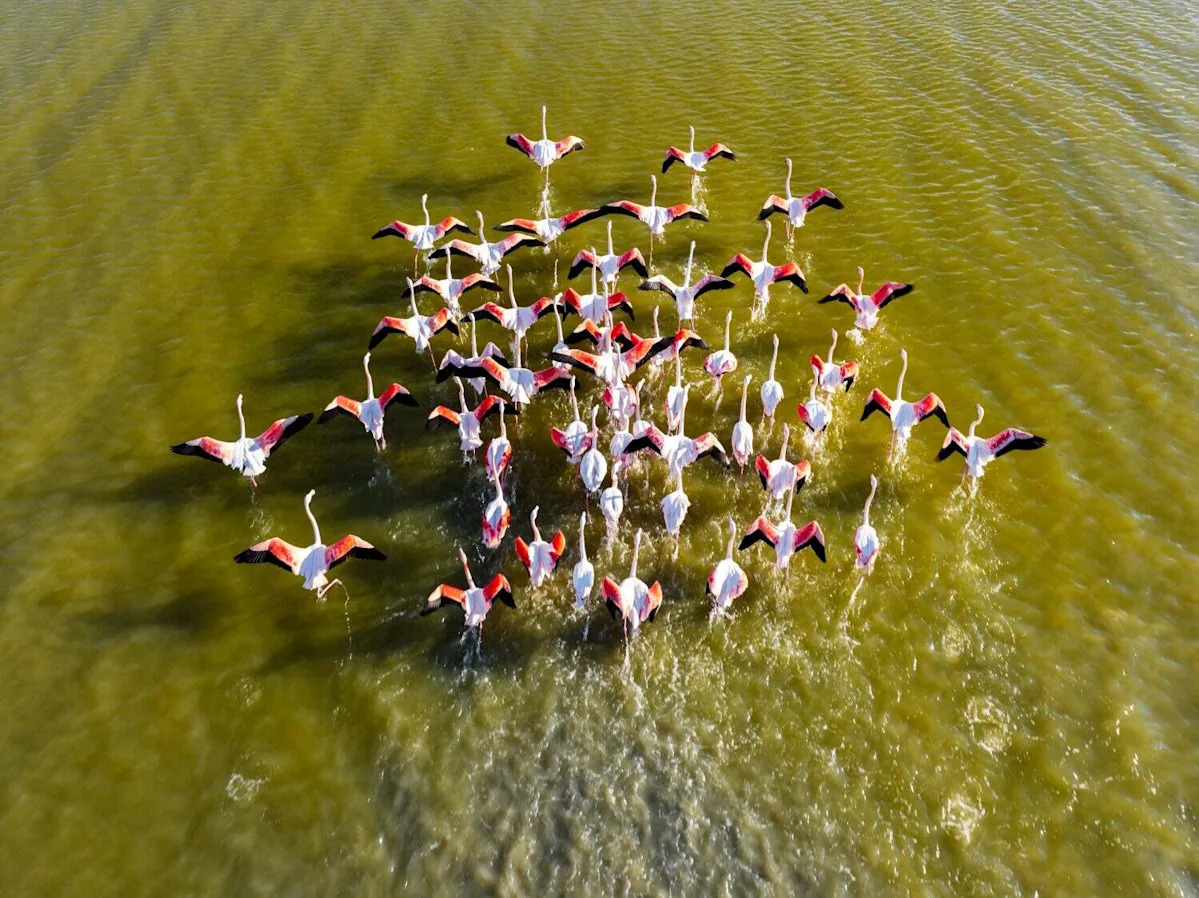
Migratory birds often make pit-stops along their annual journeys, some of which are thousands of miles long.
©F-Focus by Mati Kose/Shutterstock.com
(F-Focus by Mati Kose/Shutterstock.com)
In 2002, researchers with the U.S. Department of Agriculture and the United States Forest Service conducted a landmark study regarding the movement and machinations of migratory birds. The study was titled “Stopover ecology of landbirds migrating along the middle Rio Grande in spring and fall.” Authors Wang Yong and Deborah M. Finch authored this general technical report. They uncovered the stopover ecology of birds that make pit stops along the southwest’s grandest river: the Rio Grande. They tracked nearly 24,000 birds across 146 species, and what they found was remarkable.
For one, researchers found that 50% of captured birds lacked visible fat stores. Migratory birds rely heavily on fat stores to make their long journeys. Finding a habitat like the Rio Grande means a life-saving maneuver for certain migratory species that stop there along the way back up north. Such stopovers pay dividends too. The researchers found that certain migrants showed an average of 7.46% of mass body gain per day in the spring and 4.68% in the fall. This shows that specific environments, such as the willow- and cottonwood-rich terrain around the Rio Grande, provide enough high-quality food for migrants to replenish their energy and more.
Researchers also found that 60% of fall migratory birds were hatching-year birds. Furthermore, they were more likely to be fat-depleted than adults. That means these stopover environments are vital for the survival of the next generation of birds. The study also highlighted the importance of choosing the right green space. The invasive species Saltcedar, for example, had the lowest species richness. Cottonwood with a Russian olive understory, however, had the highest species richness.
General Geographic Guidelines
As a general rule of thumb, migratory birds prefer certain types of terrain for their long-haul pit stops, typically in three key regions. River corridors with abundant native vegetation, such as willows and cottonwoods along the Rio Grande, support high insect biomass, which in turn attracts more birds, particularly in areas with complex understories and diverse shrubs.
Migratory birds also prefer coastlines. It is safe to say that these birds are likely relieved to see the coast after flying hundreds of miles over the open ocean. Coastlines, though not as rich in biomass as rivers, offer important energy sources through coastal scrub and maritime forests. These areas often provide migratory birds with their final meals before challenging transoceanic flights.
Migratory birds also use urban green spaces. Although fragmented compared to natural and abundant areas like the Rio Grande, urban green spaces provide small havens for migratory birds before they reach major tracts of forest.
What You Can Do to Help

Supporting migrants means leaving out leaf litter; species like sparrows and warblers use it for foraging.
©NatalieSchorr/Shutterstock.com
(NatalieSchorr/Shutterstock.com)
While the aforementioned study involved the relatively wild Rio Grande River, you can still make a difference for migratory birds by transforming parts of your local ecosystem. One major factor that decides whether they will land somewhere to rest or not has to do with native plants. Such plants host far more indigenous insects than invasive species. Plus, species like oaks, willows, and berry-producing bushes provide much better fuel for birds.
As the study noted, a mixture of overstory tall trees and dense understory shrubs attracts the widest variety of species. You may think you are helping birds by cleaning up every fallen leaf in your yard. However, leaf litter is a prime foraging location for birds such as sparrows and warblers. Instead of removing all leaf litter, you can support birds by providing clean drinking water with a dripper or small fountain.
Another way to help migratory birds is to reduce hazards. Placing bird-safe decals or screens on your windows—ensuring decals are spaced no more than 2 inches apart—and keeping domestic cats indoors during peak migration windows can significantly reduce risks for these long-haul flyers.
The post These Hidden Pit Stops Are Critical for Migratory Birds’ Survival appeared first on A-Z Animals.