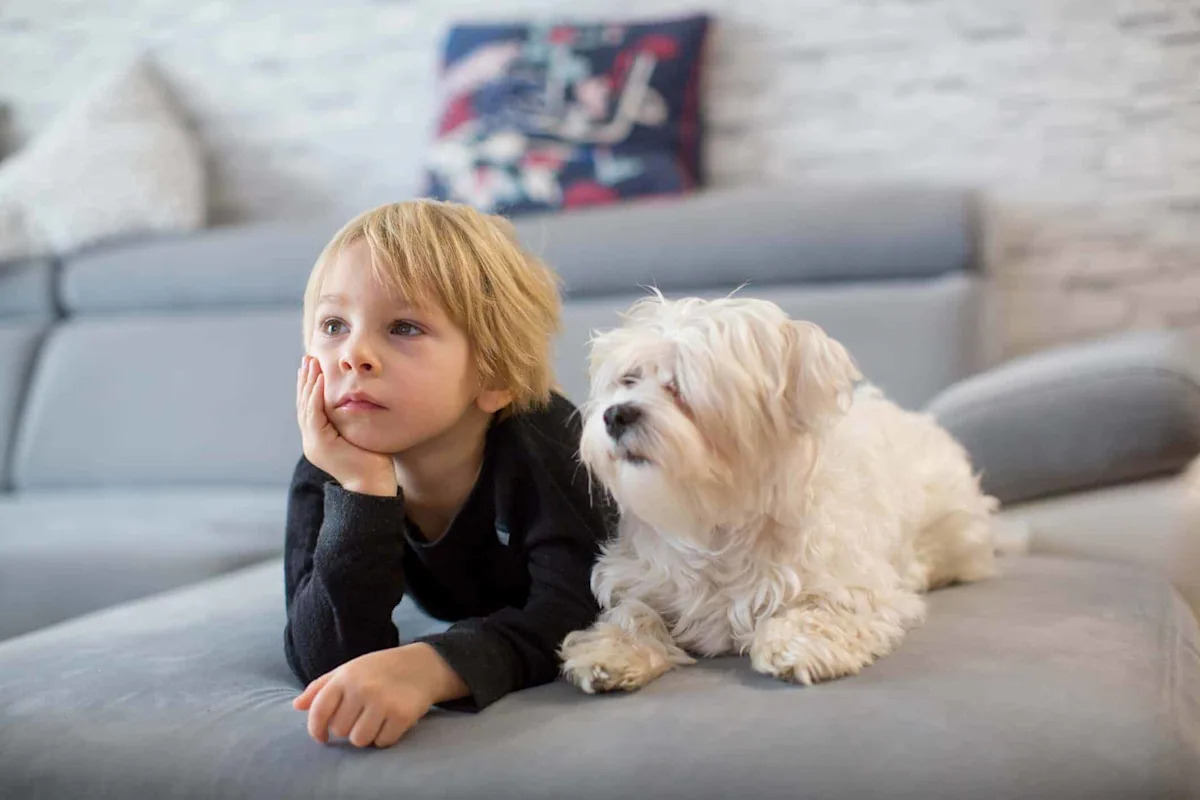
The post What Makes a Dog “Good with Kids”? appeared first on A-Z Animals.
Quick Take
-
What makes a dog “good with kids” depends on temperament and environment.
-
Training and supervision are essential for safety.
-
Matching energy and lifestyle helps prevent conflict.
-
Teaching children proper behavior reduces risk.
The idea of a “kid-friendly” dog is appealing, especially for families seeking a calm companion for their children. But what makes a pup “kid friendly” is quite complex. A dog’s ability to live safely and comfortably with kids depends on temperament, training, supervision, and the behavior of the children themselves. Health organizations consistently warn that any dog can bite under the wrong circumstances, particularly when stressed or startled. Understanding what truly makes an animal safe around children helps families avoid assumptions and create a healthier environment for both pets and people.
The Myth of the “Kid-Friendly” Dog
Many people believe certain dogs are naturally safe for children, but this isn’t consistently true. An animal that behaves well with one child may react differently to another, especially if that child is younger, louder, or less predictable. Instead of labeling dogs as safe or unsafe, it is more accurate to think in terms of conditions. Canines respond to stress, noise, and handling. When conditions exceed their comfort level, even a gentle animal may react defensively. This means safety depends on a combination of the animal’s temperament, the child’s behavior, and the level of adult supervision.
Breed Temperament
When choosing a pet for a family with kids, temperament matters a great deal. Kid-friendly dogs are typically patient, gentle, and tolerant of noise and sudden movements. They tend to be affectionate and social rather than reactive, making them more forgiving around children. While breed can influence temperament, the more important factors affecting how dogs behave around kids are training, early socialization, and individual personality. Even typically easygoing canines need guidance and positive experiences to become reliable companions for children.
Children’s Age
Children interact with animals differently depending on their age. Babies and toddlers are unpredictable. They grab, crawl, and make sudden movements that can confuse or frighten a pet. Older children are more capable of following rules, such as approaching calmly and respecting the creature’s space. Each developmental stage introduces new challenges, so families must continuously reassess how the dog and child interact. What works for a school-age child may not be safe for a toddler.

Smaller children are more inclined to grab dogs unpredictably.
©Volodymyr TVERDOKHLIB/Shutterstock.com
Lifestyle Compatibility
A dog’s energy level should match the household’s lifestyle. High-energy breeds require significant exercise and mental stimulation. Without it, they may become restless, jump on children, or engage in rough play that can lead to accidental injury. Low-energy breeds may be better suited for quieter homes but might not tolerate constant activity. The goal is to find a balance where the animal’s needs align with the family’s routine.
Size and Physical Strength
Size alone does not determine whether a dog is safe for children. Large dogs can unintentionally knock over small children, while small dogs may feel threatened and react defensively when handled roughly. Strength is a factor, especially when it comes to managing the animal during walks or unexpected situations. Families should consider whether they can physically control the dog if needed and whether the dog can tolerate accidental bumps or clumsy handling.

The size of the animal is an important factor, especially if the child will be taking the dog on walks.
©Da Silva Emmanuelle/Shutterstock.com
Herding Behavior and Children
Some dogs, especially herding breeds like border collies, Australian shepherds, and Shetland sheepdogs, are naturally sensitive to movement and may try to “organize” active children by circling, nudging, or lightly nipping at heels. These behaviors are instinctive rather than aggressive, but they can be confusing for kids. With proper training, structure, and exercise, most families can learn to manage these instincts at home.
A Tolerant Dog? Experts Differ

Elisha Stynchula is a certified professional dog trainer and family dog mediator and owner of “I Said Sit!:” School for Dogs, Inc. in Los Angeles. Here’s her advice about what to look for in a family dog:
“When choosing a dog for a house with kids I think it is important to select a dog who is tolerant of mistakes. A dog that is not sensitive physically or mentally will be more stable and that will help things be more smooth. We also want a dog that is not too big or too small. The final consideration is energy level. Low to medium energy is going to fit best into the average family with kids.”
Ali Smith, Dog Trainer & Behavior Consultant at Rebarkable, takes a different view of tolerance as a criterion of a good family dog. In her words:

“Lots of people will say ‘tolerance’ here, but i dont think it should be tolerance. I think we should focus on a dog who is easy to read, communicates clearly and is easy to train. This distinction is really interesting because ‘tolerant’ can mean you’ll often allow the child to go too far with the dog. You might treat it as acceptable for a child to pull its tail, grab its ears and expect the dog to take it, when that’s not okay and no dog should be expected to take that. So to me, tolerance is a dangerous word in a quality people look for in family dogs.”
Consensus Best Breed for a Family Dog
Stynchula and Smith both recommend the cavalier King Charles spaniel as an excellent breed choice for families with small children:
Elisha says, “Currently, I am really loving a well-bred cavalier King Charles spaniel. They were bred to be companions, lapdogs if you will, and they would happily spend the afternoon getting petted. Another option, a little bigger, is the beagle. They tend to be very tolerant and as a pack dog they enjoy being in a family. They are trainable and can handle the busy activities of a family.”
Smith also chooses the King Charles for a family wanting a small dog: “Bred as a companion dog, these fluffy fidos are really pretty cute! As a family dog, they’re docile and passive. The big thing with these (as with little dogs generally) is to remind our kids that these aren’t toys. They can’t be cuddled without them being a willing participant, and resisting the urge to lift and carry them all the time is very important.”

The cavalier King Charles spaniel was bred for generations as a companion animal, and it’s good at its job.
©otsphoto/Shutterstock.com
‘tolerant’ can mean you’ll often allow the child to go too far with the dog. You might treat it as acceptable for a child to pull its tail, grab its ears, and expect the dog to take it, when that’s not okay and no dog should be expected to take that. So, to me, tolerance is a dangerous word in a quality people look for in family dogs.
Ali Smith, Dog Trainer & Behavior Consultant at Rebarkable
Breeding Matters
Both of our experts stressed that whatever dog is chosen must be well bred. Taking golden retrievers as an example, Stynchula says, “I have to caution, make sure you get a good breeder, because there are a lot of poorly bred/backyard bred goldens out there and those dogs can have terrible genetics and behavior.”
Smith adds, “All these family dogs must be well bred (aka ethically or responsibly bred). A poor example of the breed is not one to set the standard.” She also cautions not to think a breed like a golden doodle will always be a good choice because it combines two favored family dog breeds: “the volume of low quality breeders in this space is really inhibitory to finding a ‘good dog.’ They do exist, they’re just harder to find.”
What About Shelter Dogs?
Smith shares that, “as a mother of a toddler, when I bring a new dog into our family, it will be purchased from an ethical breeder.” Why not get a shelter dog? To her, “unless the dog in the shelter is a well-documented surrender who has zero temperament issues etc., it’s important to remember that the majority of shelter dogs are not a ‘I can cure you with love’ situation, and could represent serious behavioral adjustments and training or medical costs, which are almost always exacerbated by children.”
Stynchula suggests a third option: “I think rescuing a dog from the shelter is great, but you are never guaranteed anything when you do that. Here in LA there are great rescues that have many of their dogs living in foster homes and that is the best way to adopt when you really can’t risk getting a dog that is the wrong fit. A foster parent will know the dog and be able to speak more about their personality and what they like and don’t like. That will really help ensure a dog that will tolerate living in a home with kids.”

Shelter staff can help a family make a good choice based on the animals observed behavior and known history.
©Evgenii Bakhchev/Shutterstock.com
If you do decide to go this route, make sure you carefully read the behavior assessments provided by the shelter, based on the animal’s known history and observations while it has been housed at the shelter. Multiple visits and supervised interactions with children can also provide a clearer picture of compatibility.
A Balanced Approach to Family Life with Dogs
Creating a safe and positive relationship between dogs and children requires thoughtful planning, consistent training, and active supervision. No dog is automatically “good with kids,” but many can thrive in family environments when their needs are understood and respected. By focusing on temperament, education, and ongoing care, families can build strong, lasting bonds that benefit both children and their canine companions.
The post What Makes a Dog “Good with Kids”? appeared first on A-Z Animals.