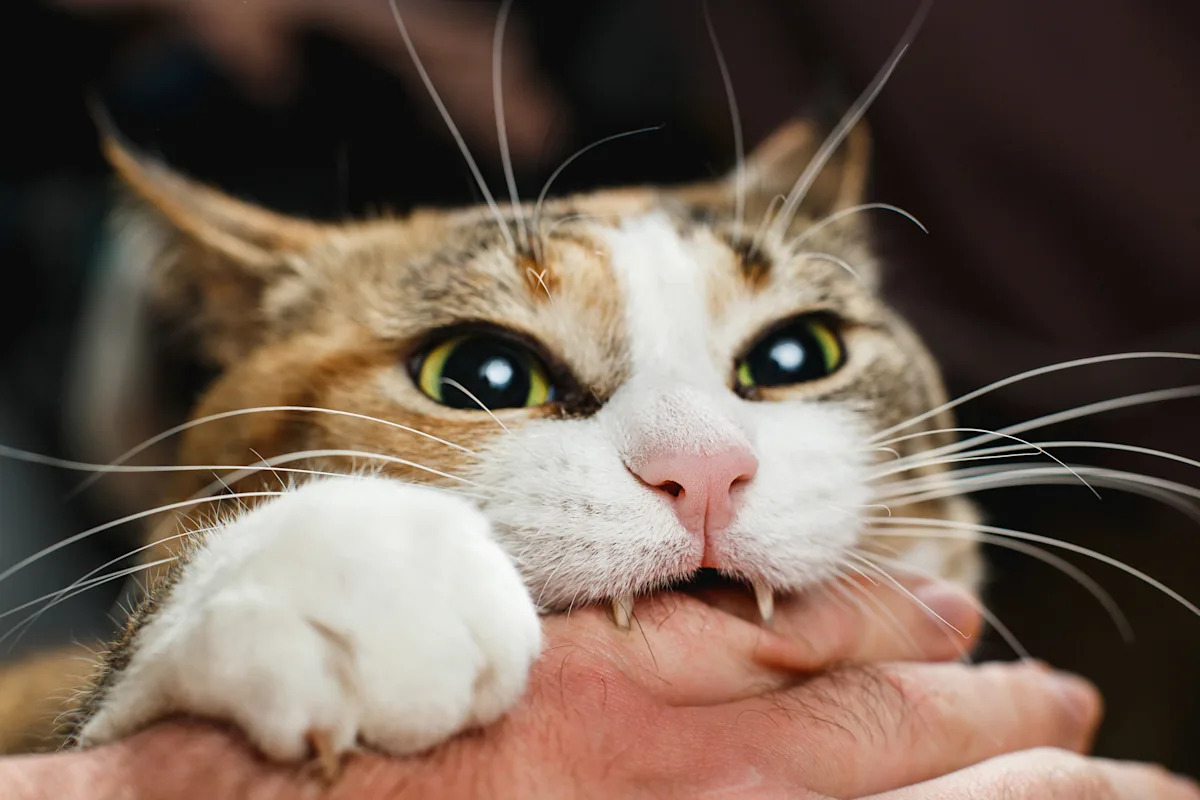
Have you ever tried petting your cat, and it suddenly bites during interaction? You might have come across this question: Does it depict aggression or something else? Behavioral research indicates that biting is a common form of communication in cats.
At one moment, you will feel your cat loves you, but in another moment, they’ll bite. This is not always a sign of anger. Communication from a cat can happen in many ways, and biting is just one of them.
Let’s learn about a few reasons why your cat bites you and what could be going on from their end.
1. Overstimulation during petting
Cats love attention from you, but only up to a certain point. If you keep on petting them beyond this point, they might get irritated. They seem to enjoy this at first, but later start to feel uncomfortable.

Unlike dogs, instead of walking away, cats might react to this behavior in a different way by biting you. If you notice a few body movements of a cat before they bite, you can prevent this from happening.
Small signs like the flickering of their tail, ears turning back, or them getting up on their toes suggest that they are becoming uncomfortable. With a bite, they’re just conveying that “enough is enough.”
2. Play aggression
Cats are naturally playful animals, and sometimes, while playing, they might accidentally bite you. When small kittens do not get enough stimulation, biting can happen as a part of the play.

As a part of the cat family, cats use their teeth and paws while playing, and this reflects their natural hunting behavior. This is also common in under-stimulated cats. Such behavior is noticed when cats do not have proper toys to play with.
3. Fear or stress response
A cat will bite you if it feels scared or threatened around you. Several triggers, like loud noise, encountering strangers, or being handled with force by unknown people, can put cats in a fight or flight mode. And this is when they bite, just to defend themselves.

It does not mean that the cat is aggressive; it is just trying to protect itself. It is very important to see a cat’s body language.
4. Attention-seeking behavior
When a cat does not get enough attention from its pet parents, it might bite you. This is a request for your attention rather than an attempt to frighten you. Such behavior only happens when they feel bored or feel ignored by you.

In some cases, biting may be a learned behavior used to gain attention, especially if it has been reinforced previously.
5. Love bites (affection)
As much as you love your cat, they love you too. While you gently pet your cat, they might give you love bites, and this is a way of showing affection to you.

Such an act is not painful or aggressive at all. It is often misunderstood as an aggressive act by pet owners, but these are typically soft and not intended to cause harm, often linked to grooming or bonding behavior. This is their way of bonding with you.
6. Medical or discomfort-related reasons
Sudden or frequent biting may indicate pain or discomfort. It can also signal that there might be some underlying discomfort-related reasons. Your cat might be suffering from severe illness or an injury, and if they are in pain, they will bite to cope with it.

Your cat, especially a small kitten, may bite you or scratch you if you touch their sensitive areas. If this rarely happens, it is normal, but if it happens frequently, it might require some vet care.
Conclusion
Now you know that biting is a way of communicating for cats, and not just a random behavior. If you understand what triggers them to bite, you can actually prevent this from happening.
For example, a small kitten will bite your hand because it doesn’t have enough toys to rely on. You can also prevent this from happening if you start understanding their body language, whether they feel tense or not. Though cat biting might not be a serious issue, looking after its causes might help you to avoid it.