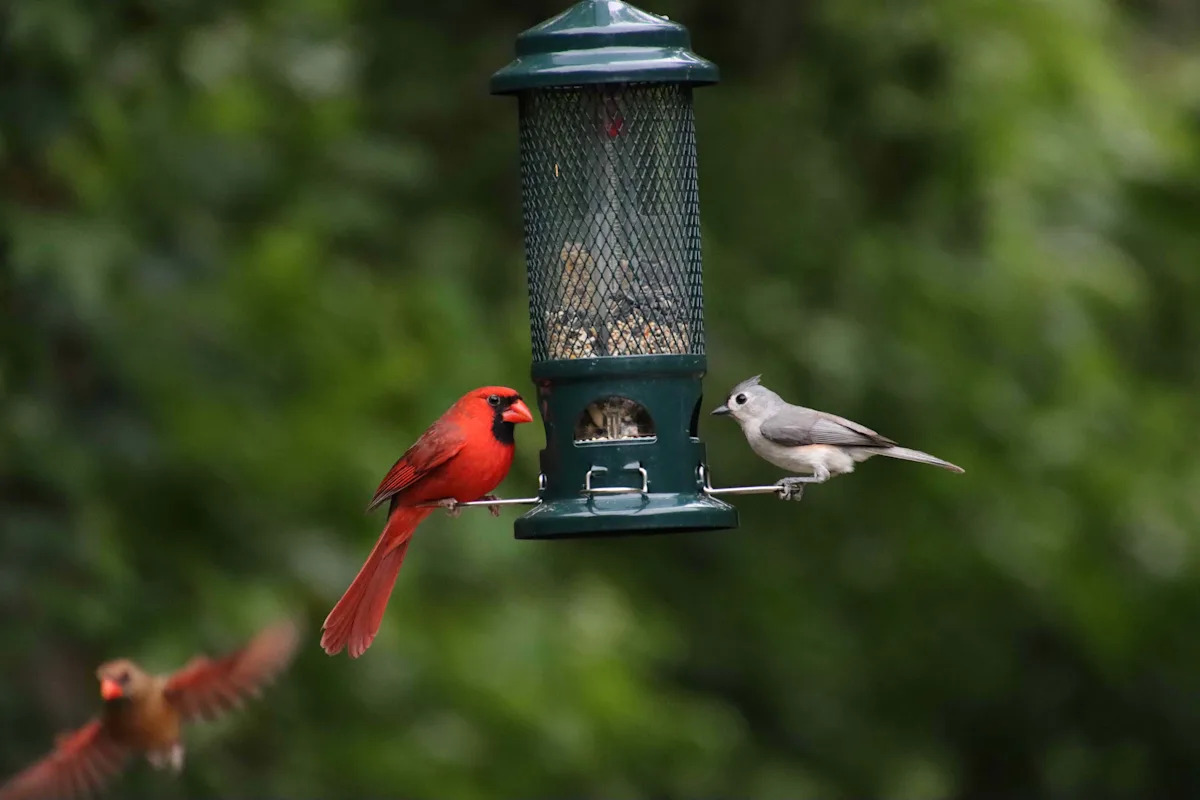
Once you’ve decided you want to install a bird feeder in your yard, the next step is figuring out where to place it. Some bird feeders can be hung from a tree branch, a shepherd’s hook, or mounted on a window. Hanging it on a tree branch may seem an obvious choice, especially since trees can provide some protection and a feeling of safety for birds. “Hanging a bird feeder can be a wonderful way to attract wildlife to your yard, but choosing the right location is important for the safety and health of visiting birds,” says Gail Karr, curator of special animal exhibits at the Memphis Zoo.
We spoke to birding experts on whether you should hang a bird feeder from a tree branch, how to decide, and what to consider.
What To Consider Before Choosing A Location
The location of a bird feeder requires plenty of consideration to attract birds and ensure their safety. The last thing you want is to have birds come to your yard and be put in harm’s way from wildlife. “Choosing a safe feeder location is important because birds are often distracted while feeding and may not notice predators approaching,” says Karr.
Pay attention to the behaviors of birds that are frequenting your yard before assuming you know the best spot. “Start by observing how birds already use the space,” says Keith Paluso III, author of The Bird-Watching Bucket List, and based in Munford, Tennessee. “Look for areas where birds naturally perch or forage along edges between open lawn and vegetation.” Hanging a feeder in an area where birds are already spending time makes it easier for them to stay and keep coming back. “Placing feeders near these natural travel routes tends to attract more species,” says Paluso.
Check Safety
Observe the landscape from a bird’s eye view to know what could put them in danger. Keeping birds safe needs to be a high priority. “A good general rule is to look at the surrounding area for attack points,” says Paluso. “If nearby branches, fences, roofs, or trunks are within easy jumping distance, squirrels, or other animals will likely find a way to reach the feeder.”
Considerations For Hanging from A Tree
Before assuming that placing a bird feeder off a tree branch is the ideal location for your property, check what wildlife often visits your property. Raccoons, squirrels, and cats may want to dine at the feeder, too and prey on a bird as well. “When hanging a feeder from a tree, I like to consider branch placement, distance from the trunk, and surrounding access points for predators,” says Paluso. Make sure the branch isn’t flimsy, either. “A sturdy branch that allows the feeder to hang several feet away from the trunk is ideal because it makes it harder for squirrels to jump directly onto the feeder,” he says.
Accessibilty
A feeder needs to be easily accessible for birds to fly in and fly out. You also need to have easy access to add more birdseed and clean the feeder every week or so. “People should also think about visibility and accessibility so the feeder can easily be refilled and cleaned,” says Paluso. Birds should have a clear path without dense branches that could conceal predators, he adds.
Wildlife and Cats
Squirrels scurrying up and down trees may be fun to watch but they could put visiting birds in danger. Squirrels are agile and can reach areas that seem impossible to access. Domestic cats are a threat to birds, too. Cats are a major threat to wild songbird populations, says Karr. “Bird feeders should not be hung in locations where cats can easily access them,” she adds.
How To Hang
Once you’ve spent time observing birds and wildlife habits on your property the height and location of the bird feeder in a tree is important. “If a tree is a safe option in your yard, proper placement can help protect birds while they feed,” says Karr. “Look for a strong horizontal branch that is 5 to 7 feet above the ground.” Bird feeders placed within this height range minimize birds being attacked. “Keeping feeders elevated also reduces the likelihood of ambushes, since birds have better visibility of their surroundings and can approach and leave the feeder more safely,” says Paluso.
And it’s not only how high to hang a feeder from the ground. You also want to place it far from the trunk as that can make it easy for squirrels or cats to reach. “Feeders placed too close to a trunk or nearby branches make it easy for squirrels to jump onto the feeder,” says Karr. Provide plenty of distance from the tree trunk. “The feeder should also be positioned 10–15 feet away from the tree trunk or other climbing routes to help deter predators,” says Karr.
If you realize that hanging a bird feeder from a tree won’t be safe for birds, Karr says, “Don’t be discouraged if there is not a suitable tree in your yard, as there are several alternatives to hanging feeders.” Feeders can be hung on shepherd’s hooks or hung on a cable that is suspended between two trees, she adds.
Plant Native Species In Your Landscape
Birds tend to be attracted to yards where there is habitat, insects, and plants that may have food, such as shrubs that produce berries. Grow native species of plants, trees and shrubs that birds in your region like. “Using native species of shrubs and trees in your landscaping in a way that provides cover will also aid in supporting local insect populations that your visiting birds will find of interest as well,” says Paluso. You may find more diversity of birds visiting, too, once they know there is food and shelter. “Areas with high habitat diversity, including a mix of trees, shrubs, open space, and ground cover tend to support more species of birds overall, and you can adjust your types of feeders to cater to these birds,” says Paluso.
Read the original article on Southern Living