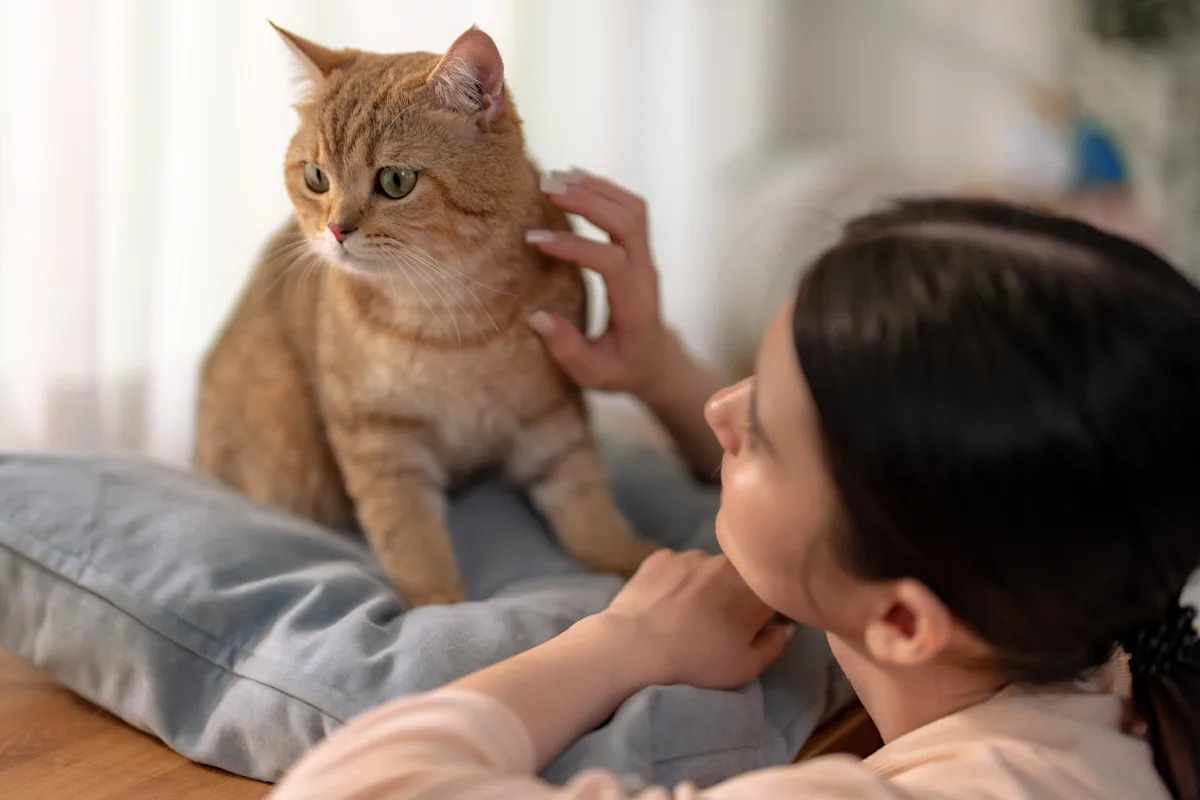
Cats can sometimes seem unpredictable in how they interact with humans. One minute, they sit next to you and shower you with love; the next minute, they just walk away for no reason.
A lot of people think cats are rude or don’t care, but that’s not really true. They just think differently from us. We expect them to behave like dogs or like humans, but they don’t.
Research suggests that cats form social bonds and express affection in subtle ways that differ from dogs or humans. They don’t show feelings in obvious ways. You kind of have to notice small things.
Once you do that, you realize they’re not ignoring you; they’re just doing things in their own style.
1. Cats may see you as a “big cat.”
This sounds weird at first, but it actually makes sense. Cats don’t really treat humans like a completely different species. The way they act with us is very similar to how they act with other cats they like.

Like when they rub against your legs or sit near you, it’s something they also do with other cats. It’s part of bonding, which is explained by social bonding in animals. So basically, your cat might think you’re just a bigger, slower cat who somehow controls everything in the house.
2. You are their source of safety
Even though cats act like they don’t need anyone, they actually do feel safe around certain people. If your cat sits near you when it’s relaxed or sleepy, that means it trusts you. Cats don’t relax in random places. They choose where they feel safe.

Cats stay close to familiar humans when they feel comfortable. Sometimes they won’t sit on you, but just near you, and that’s still a big thing for them. They won’t do that around someone they don’t trust.
Cats respond and seek attention only when they feel like it. They may jump from one room to another or suddenly choose to sit alone without any warning. This behavior can feel confusing, but it’s simply how they regulate their comfort and space.
3. Cats think you are a food provider
Let’s be real, food matters a lot to cats. They quickly learn who feeds them and when. If your cat suddenly appears near the kitchen at the same time every day, it’s not random. This behavior is often explained by classical conditioning, where cats associate people with feeding routines.

They connect you with food. That’s also why they follow you more when they think it’s feeding time. In their mind, you are basically the “food person.” Honestly, that role is very important to them and also makes humans a key part of their daily routine.
4. They show affection in subtle ways
Cats don’t show love in a loud way. They’re quieter about it. Their affection is small but meaningful, like slow blinking, lightly touching you with their head, or just sitting close without doing anything. This is part of Feline communication.

If your cat slowly blinks at you, it’s actually a good sign. You can even blink back slowly; it sounds funny, but they understand it.
5. Cats may “train” their humans
Before we get into this, it’s important to understand that cats see ‘owners’ differently. Cats think of you as an owner in a different light from us. Most consider “owners” as people who feed them and give them attention.

To a cat, “owner” is simply someone who is always there. They don’t label relationships the way we do, but they still form connections in their own way. This one is kind of funny when you think about it.
We think we are training cats, but sometimes it feels like the opposite. Cats learn very quickly what works on us. If they meow and you give attention, they’ll do it again. If they paw you and you respond, they remember that too. This is operant conditioning.
After some time, you don’t even realize it, but you start reacting the way they expect. They figure out your habits faster than you figure out theirs.
6. They still see themselves as independent
Even if your cat likes you, it still wants its own space. Cats don’t depend on humans the same way dogs do, and that’s just how they are. They like having control over what they do. This is linked to their natural need for personal space.

That’s why sometimes they ignore you or walk away suddenly. It’s not personal; they just like doing things on their own terms.
Unlike dogs, a cat being in the same room is not always an invitation for attention—it simply means they are choosing to share space with you.
Conclusion
Cats may seem distant at times, but they care in subtle and meaningful ways. Their affection isn’t loud or constant but it’s subtle and chosen. And that choice is what makes their companionship feel genuine and special.
Once you understand their language, their quiet gestures become clearer, revealing a deep, unique bond built on trust, comfort, and mutual respect.