The post Your Pet Stopped Breathing. Here’s What to Do Next appeared first on A-Z Animals.
Your pet goes limp, silent, and frighteningly still. Your thoughts spin while the clock races forward. In that moment, clear, timely action matters most. Though you can’t call 911 for pets, you can take practical, lifesaving steps until you get your animal to an emergency vet. Based on expert guidance, here’s what to do in one of the scariest pet emergencies—when your pet stops breathing.
Answers From an Emergency Vet

Dr. Michael Hyder kindly agreed to advise us on this article. With nearly a decade of experience in emergency vet care, he serves as Medical Director at VEG ER for Pets, a 24-hour animal hospital in Palm Desert, California.
Common Reasons Pets Stop Breathing
“Pets can stop breathing for a variety of reasons,” explains Dr. Hyder, “and it is often a sign of a serious, life-threatening problem. Some of the more common causes include trauma, such as being hit by a car, choking or airway obstruction, severe allergic reactions, heart disease, poisoning, or complications from heatstroke. Drowning or near-drowning events are another important cause, especially during warmer months. In some cases, breathing may slow or stop due to advanced illness or after prolonged oxygen deprivation—for example, from inhaling smoke in a fire. Regardless of the cause, a pet that is not breathing should always be treated as an emergency.”
First, Make Sure It Is Safe for You
Experts advise pausing before touching your pet to assess the situation. Check for moving cars, deep water, fire, or live electric cords. Do not rush into danger yourself. Turn off power if you see damaged cords or flooded outlets. If your pet is near a road, block traffic or ask others to help. Move your pet only when you feel confident the scene is safe. This is not selfish; your safety allows you to keep helping your animal.
On the Way to the Animal Hospital
Dr. Hyder urges, “If a dog or cat is not breathing, the most important priority is to get them to a veterinary hospital as quickly as possible. If someone else can drive, that allows you to start basic support. If you are unsure what to do, calling an emergency veterinary hospital while en route can help guide you in real time.”
Check Breathing and Heartbeat
“While you are on the way, you can check for breathing and responsiveness,” Hyder says. “Look for chest movement and try to feel for airflow from the nose. Next, check for a heartbeat by placing your hand on the chest, just behind the elbow.”

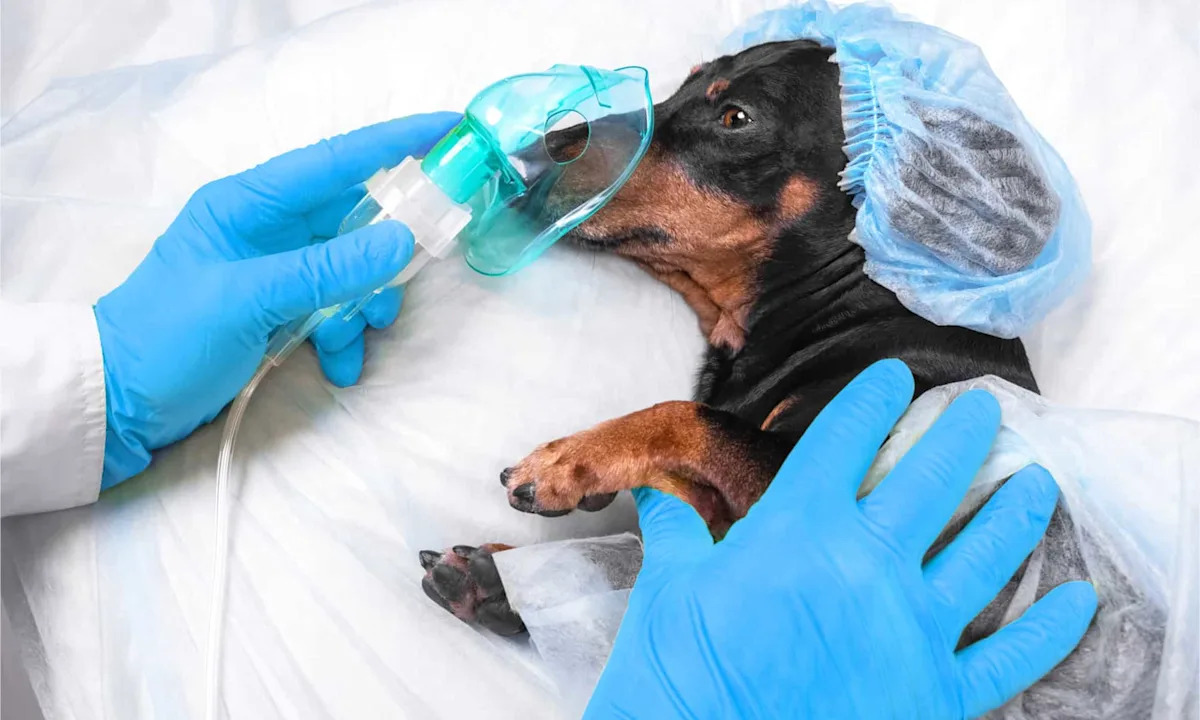
Stay calm and check your animal’s breathing and heartbeat on the way to the vet.
©toonybearr/Shutterstock.com
Rescue Breathing
“If there is no breathing but a heartbeat is present, you can begin rescue breathing by gently extending the head and neck, closing the mouth, and giving small, steady breaths into the nose every few seconds. The goal is just to see the chest rise, not to forcefully blow air in.”
Chest Compressions
“If there is no heartbeat, chest compressions may be needed along with rescue breaths. Place your hands over the widest part of the chest and compress firmly and rhythmically, aiming for about one-third of its width. Allow the chest to fully return to its normal position between compressions. That said, CPR in pets is difficult to perform correctly without training, and outcomes are often poor outside of a hospital setting. The goal at home is not to replace veterinary care, but to provide support while you are getting to a clinic as quickly as possible.”
Drowning Emergencies
Drowning requires fast and focused action. Pull your pet from the water as safely as possible. Once on land, Hyder recommends the following steps: “Remove the pet from the water and check for breathing and a heartbeat. Clear any visible debris from the mouth and nose but avoid spending too much time trying to drain water from the lungs, as this delays more effective care. If the pet is not breathing, begin rescue breathing. If there is no heartbeat, start compressions as well. Even if a pet seems to recover after a water incident, they should still be evaluated by a veterinarian. Water in the lungs can lead to delayed complications hours later, including serious breathing issues.”
What About Small Mammals, Birds, or Reptiles?
If your pet is a small mammal like a guinea pig, a bird, or a reptile, Dr. Hyder says, “The overall principles are similar, but the techniques vary significantly due to anatomy and size. Smaller animals require much gentler compressions and breaths, and in some cases, standard CPR techniques used in dogs and cats are not directly applicable. Birds and reptiles, in particular, have very different respiratory systems, which makes effective resuscitation more complex.”
Dr. Hyder warns, “Because of these differences, attempting CPR without species-specific training can be challenging, may not be effective, and in some cases could unintentionally cause harm. The priority in these cases is rapid transport to a veterinarian who is experienced with that type of animal. If possible, contacting an exotic or specialty veterinary clinic ahead of arrival can be especially helpful.”
Pets can stop breathing for a variety of reasons and it is often a sign of a serious, life-threatening problem. Regardless of the cause, a pet that is not breathing should always be treated as an emergency.
Dr. Michael Hyder, Medical Director at VEG ER for Pets, a 24-hour animal hospital in Palm Desert, California
What About Strays or Wild Animals?
In some situations, you might be a bystander trying to rescue a dog, cat, or wild animal like a fox or opossum that has been hit by a vehicle or near-drowned in a pool or during a flooding event. In this difficult situation, Dr. Hyder says, “Safety is the first priority. Even a normally friendly animal may bite or scratch when injured or in distress, and wild animals carry additional risks. If you encounter an injured stray or wild animal, avoid direct handling if possible. You can try to gently guide them into a contained space using a barrier like a box or towel, but only if it is safe to do so. Contact local animal control, a wildlife rehabilitation center, or a veterinary hospital for guidance. They are better equipped to handle these situations safely.”

Experts do
not
recommend attempting CPR on an unfamiliar domestic or wild animal as they can bite or scratch as they revive and cause serious injury.
©kevstream/Shutterstock.com
“If the animal is unresponsive and not breathing, it is understandable to want to help but attempting CPR on an unfamiliar or wild animal can be dangerous. In most cases, the safest and most appropriate step is to get professional help involved as quickly as possible.”
Preparing Before an Emergency Happens
You cannot predict when a pet will stop breathing. However, preparation makes terrifying moments more manageable. Look for pet CPR classes offered online or in person by organizations such as the American Red Cross or the RECOVER Initiative, and ask your veterinarian for recommendations. Post important phone numbers in easy-to-see spots, like on the fridge, and save them in your phone contacts. Keep leashes, carriers, towels, and a small first aid kit at home and in your car. Review emergency plans with family members in advance. With basic skills and supplies, you can stay calm and act quickly, giving your pet the best chance of survival.
The post Your Pet Stopped Breathing. Here’s What to Do Next appeared first on A-Z Animals.