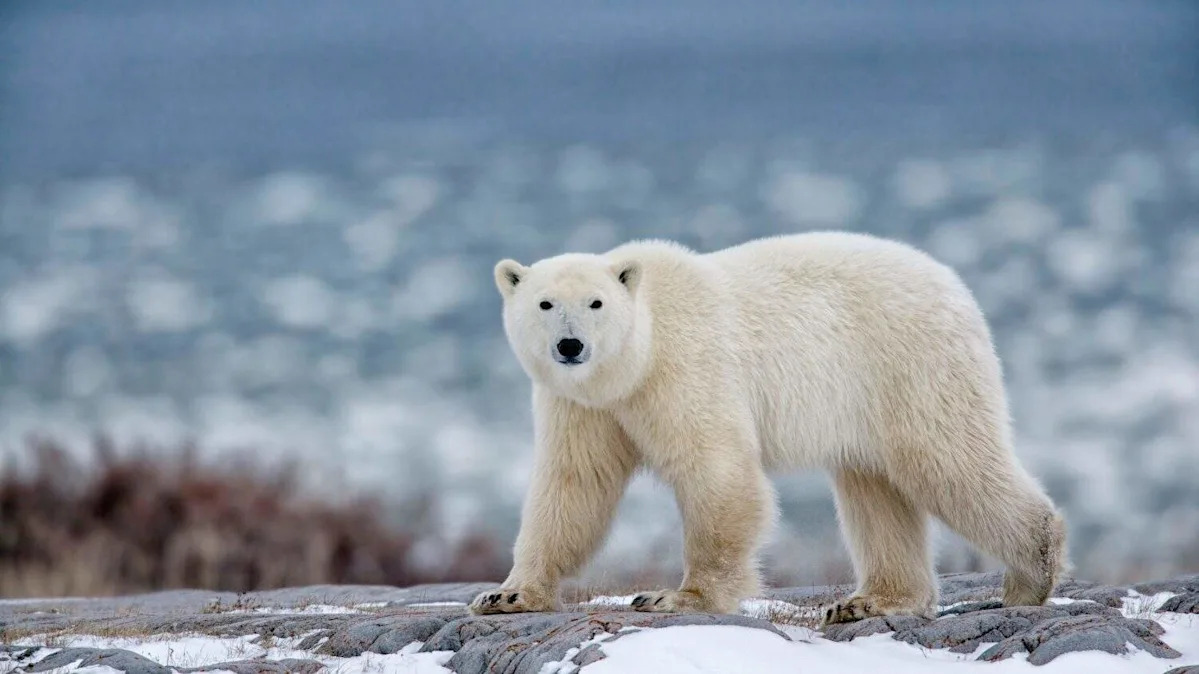
The post This 2,209-Pound Polar Bear is the Largest Bear Ever Recorded appeared first on A-Z Animals.
Polar bears are the largest of the bear species. Thanks to their protein-rich and fat-filled diets, these unique marine bears grow to incredible sizes. While some formidable polar bears have been spotted over the years, one takes the prize as the most massive of all. A 2,209-pound polar bear is the largest bear ever recorded and, given today’s climate, a record that will likely never be surpassed.
Largest Polar Bear on Record Documented Over 75 Years Ago
It is not typical to see polar bears in Kotzebue, Alaska. But in 1960, the largest polar bear ever recorded was spotted there, and no polar bear has since matched its size.
Kotzebue Sound is a waterway connected to the Chukchi Sea, which is a known hotspot for polar bears. In 1960, a polar bear of epic proportions made its way through the Sound to Kotzebue.

Largest polar bear ever recorded stood over 11 feet tall.
© – Original
the polar bear stood 11 feet one inch tall and weighed 2,209 pounds; it was believed to be male. To put that in perspective, with an average man weighing 200 pounds, this polar bear weighed nearly as much as 12 adult men combined.
Unfortunately, because of its impressive size, the polar bear was hunted and put on display. Whether there were other polar bears of this size in the region at the time, or whether this bear was an anomaly, remains unknown.
How Large Are Polar Bears Today?
Compared to the record-holding polar bear in Alaska, today’s polar bears seem tiny. However, polar bears are not only the largest bear but also the largest carnivore on land, so they remain very formidable.
The average height and weight of polar bears are as follows:
-
Males: Stand between eight and 10 feet tall and weigh between 775 pounds and 1,500 pounds
-
Females: Stand between six and eight feet tall and weigh between 330 and 550 pounds

Male polar bears today are between eight and 10 feet tall, weighing up to 1,500 pounds.
©Jane Rix/Shutterstock.com
To put this in perspective, the male of the next-largest bear species, the Kodiak bear, stands between four and five feet tall. They weigh between 1,050 and 1,177 pounds. Females are substantially smaller.
Polar bears are not as large today as they once were, and they likely never will be again.
Why Polar Bears Are No Longer Massive
Unlike other bears, polar bears require a diet high in protein and fat to maintain their size. Typically, they rely on seals to build and maintain their mass, but they will also eat whale carcasses. Over the last several decades, the Arctic sea ice has rapidly declined. This has reduced the hunting grounds, making seals harder to hunt and requiring more energy to do so.

With sea ice declining and food becoming scarce, polar bears do not have an option to grow large and survive.
©Andrewfel/Shutterstock.com
When these food sources are scarce, fish, birds, and even berries become diet staples. With this shifting diet, polar bears are incapable of growing to the size of the Alaskan polar bear found in the 1960s.
As the traditional polar bear diet continues to shift to more land-based items, there simply are not enough calories to sustain larger bears. As a result, the era of massive polar bears is over.
Polar Bears May Be Extinct by the End of the Century
The timeline for when polar bears diverged from brown bears is the subject of debate. Some researchers believe the split occurred as recently as 150,000 years ago, while others estimate it was closer to one million years ago. What is agreed upon is that, in geological terms, polar bears are a relatively young species.
Unfortunately, the future of these bears does not look bright. It is estimated that by 2050, two-thirds of the polar bear population will be gone. By the end of the century, these animals will likely be extinct due to the decline in Arctic sea ice caused by climate change. When there is not enough sea ice for polar bears to hunt seals effectively, they lose significant body fat and eventually starve.

The possibility of polar bears going extinct by the end of the century is very real.
©Steve Allen/Shutterstock.com
A December 2025 study found that some Greenland polar bears were adapting to warmer temperatures by consuming more plant-based foods. However, it is unclear whether this will be sustainable in the long term. As food sources continue to be depleted and shift toward lower-calorie options, it is possible that polar bear stature will continue to decline until they are no longer the largest bear species, making the 1960s specimen all the more remarkable.
The post This 2,209-Pound Polar Bear is the Largest Bear Ever Recorded appeared first on A-Z Animals.