The post This Turtle Grows Its Own Fishing Lure Inside Its Mouth appeared first on A-Z Animals.
Many of us were told as kids to watch out for the painful chomp of a snapping turtle. Anyone who has had the unfortunate experience of being bitten unexpectedly near a pond or lake knows the agony. But for the alligator snapping turtle, biting down on prey is more of an art form than merely a hunting technique. Before making a meal of a fish, it uses an unusual body part to catch the fish’s attention.
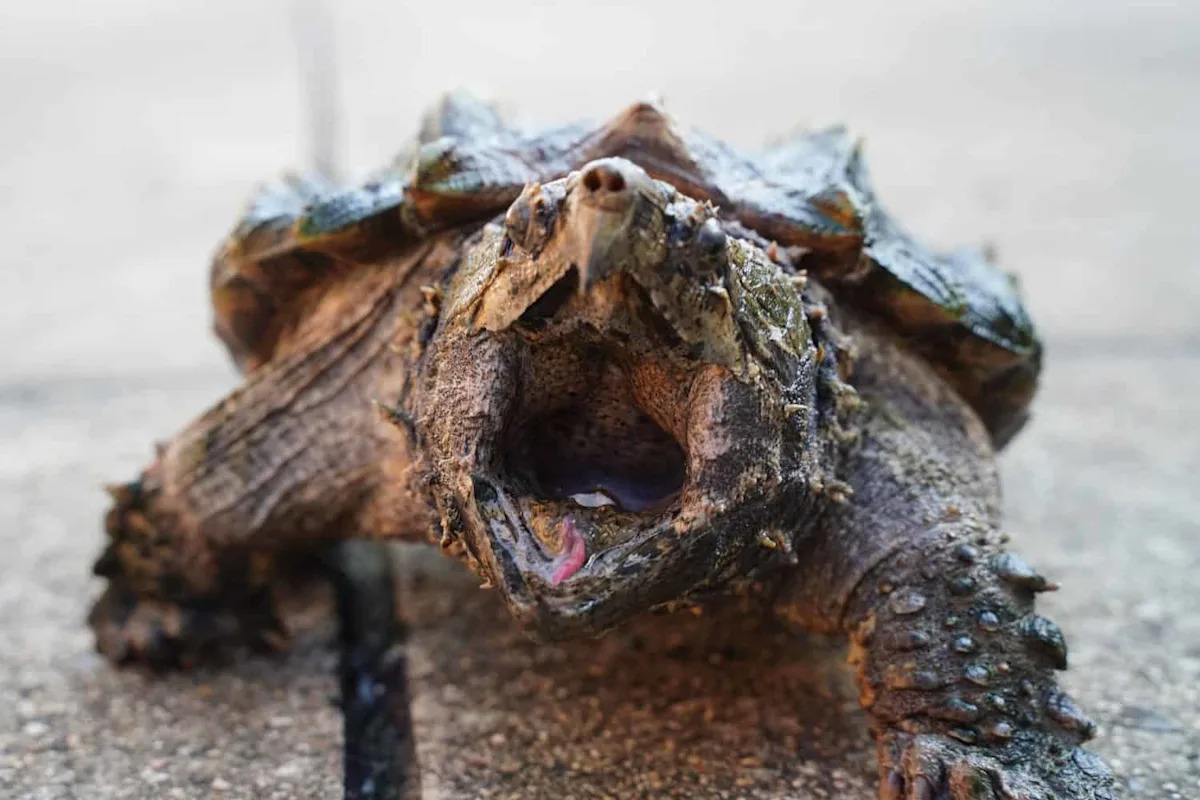
Inside the mouth of an alligator snapping turtle is a worm-like appendage. To a fish, it looks like nothing more than a snack. But on the other side is the mouth of a voracious predator that is much smarter than it appears.
The Benefit of a Built-In Fishing Lure
Alligator snapping turtles feed on a variety of prey, including crustaceans, small fish, mollusks, small turtles, crayfish, and amphibians. In some cases, these turtles may even risk a fight to feast on small alligators. Not much is off the table for this species, which will eat almost anything it can wrap its jaws around. Like other turtles, this one does not have teeth, but it has between 200 and 400 PSI of snapping force in its jaws. That is enough to sever a finger and more than enough to bring down small prey.

This is an alligator snapping turtle (
Macrochelys temminckii)
.
©iStock.com/Sista Vongjintanaruks
But that’s not the only weapon alligator snapping turtles have. Within their mouths lies a tiny, built-in lure that’s used to attract prey. While the turtle lies in wait, usually in the muddiest area of a pond or lake, its best trait is patience. It sits with its mouth open until the right moment comes along. Or, in its case, the right prey.
A Wiggling Worm of a Death Trap
The alligator snapping turtle lies in wait, sometimes for full minutes, before its prey is close enough to catch. The wiggling appendage attached to its mouth draws in fish and other small animals, curious to find out what’s causing the movement. Fish confuse it for worms and other insects, often getting too close to escape the jaws of death.

This snapping turtle has a powerful bite.
©iStock.com/thomasmales
Rather than going after their prey, alligator snapping turtles use a wait-and-see approach to hunting. It’s passive, but highly efficient. The turtle expends close to zero energy to catch its prey, instead allowing its tongue to do the work. The energy it saves is used to bite down with extreme speed, successfully trapping its prey between its jaws before consuming it whole.
The post This Turtle Grows Its Own Fishing Lure Inside Its Mouth appeared first on A-Z Animals.