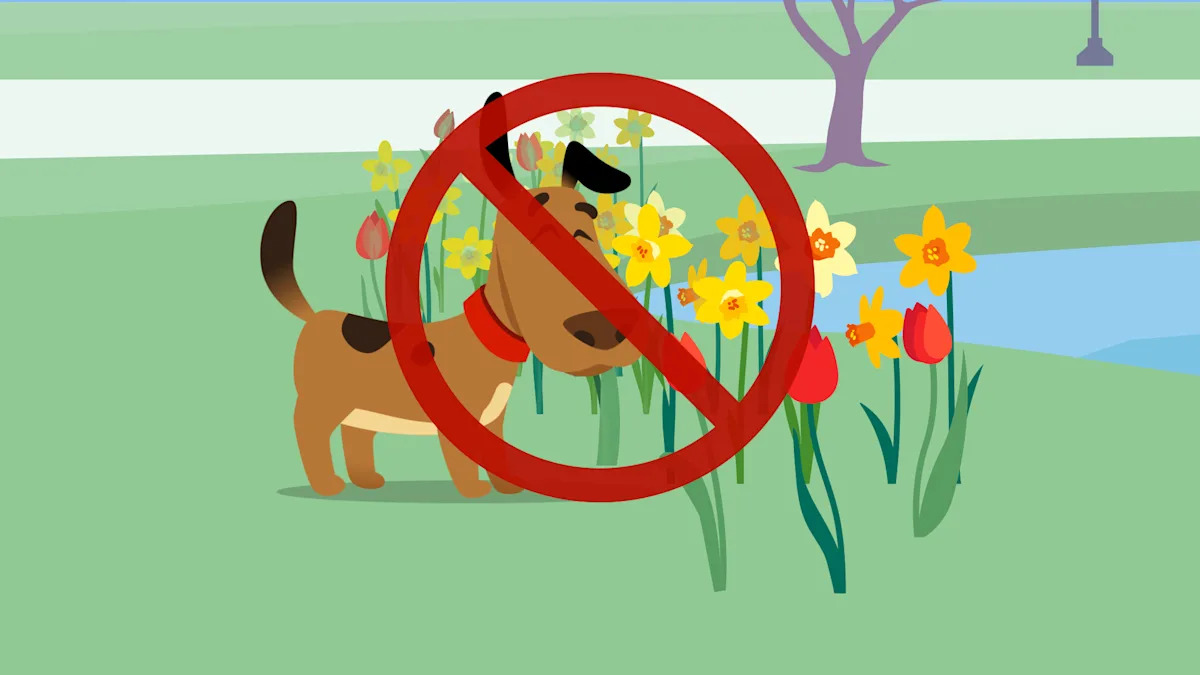
Every season brings with it a fresh host of potential threats for our four-legged friends, and that’s no different for spring. A surprising potential culprit: flowers.
Lilies, daffodils and tulips are all classic springtime flowers (and potentially the backdrop for your next photoshoot with your furbaby), but they are extremely toxic to dogs and cats.
Your pet doesn’t even need to eat a flower to experience potentially serious health concerns.
“If you are a cat parent, you have to make sure to not have lilies anywhere in your house. Lilies can be fatally toxic to cats. Any part of the lily, even contact with the pollen, can lead to devastating kidney failure as well as death,” explains Dr. Rebecca Greenstein, the veterinary medical advisor for Rover.com.
And you don’t just need to worry about flowers inside your house – flowers are blooming everywhere, so your pet could easily come into contact with something dangerous while in the yard or out on a walk.
“When the weather gets warmer, obviously we want to give them the opportunity to be themselves and run around, but pets should always be supervised and always be on leash. This prevents them from nosing into things that they shouldn’t, whether it be plants that can be toxic, spring cleaning supplies, so antifreeze in the garage, or anything else that they shouldn’t be around,” warns Dr. Greenstein.
While you may not keep your pet on a leash in your own yard, you should absolutely be aware of what plants are outside and you should still be keeping at least one eye on your animal, even if you don’t know of any specific threats.

There are plenty of unforeseeable threats that might require quick intervention.
What To Do If Your Pet Ate Something Toxic
If you have reason to believe your pet ingested or came into contact with something toxic, there are a few things you should do right away.
Remove any remaining pieces of the plant from the environment and their mouth, if needed, and try to identify it so that you can inform the vet what it was. You can even bring in a sample to show your vet.
Monitor for changes in behavior and symptoms like gastrointestinal symptoms (vomiting, diarrhea, drooling), neurological symptoms (lethargy, tremors, seizures) and organ-specific symptoms (increased thirst, abdominal pain).
If you see any of these symptoms or your pet starts to behave oddly, contact your vet immediately. You can also call even if you don’t see any symptoms and just want to check in with a professional, because it’s always better to be safe than sorry.
Sara Tonks is a content meteorologist with weather.com and has a bachelor’s and a master’s degree from Georgia Tech in Earth and Atmospheric Sciences along with a master’s degree from Unity Environmental University in Marine Science.